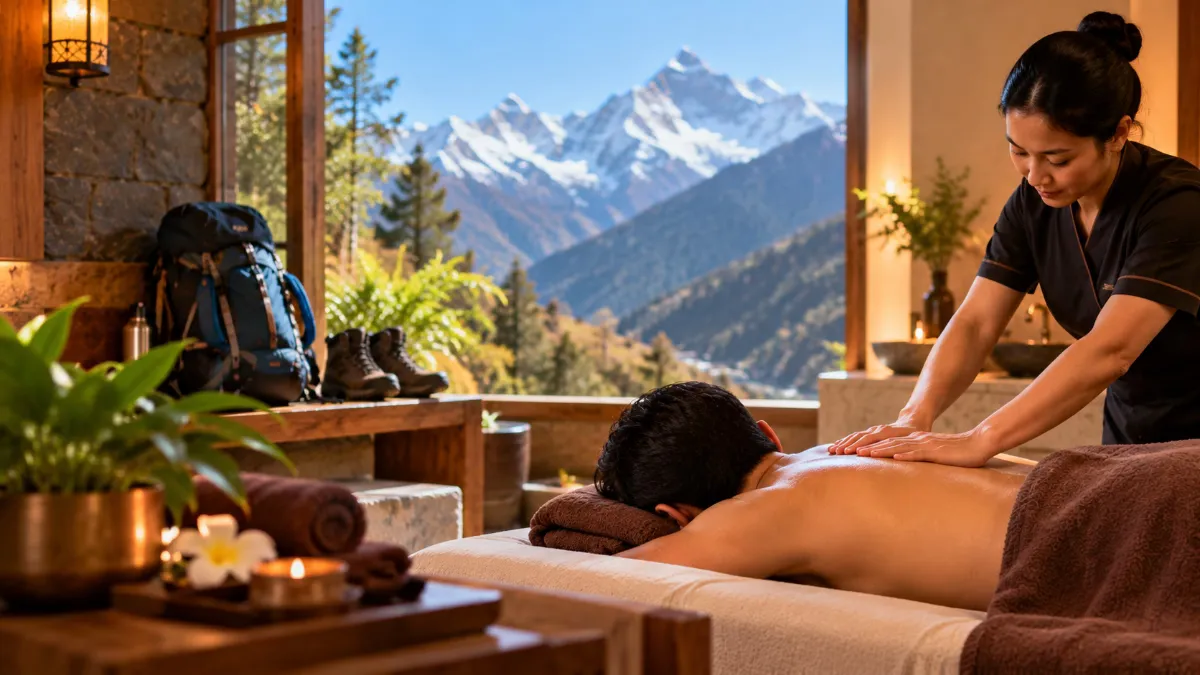
Book a massage a few days before Annapurna and you may reach the trailhead feeling looser and more relaxed. Book a very firm session as soon as you return to Kathmandu with tender legs, and that same pressure might feel like too much. Whether you get a massage before or after a trek is not simply a question of technique. It is about timing, how your body feels, and what you want from the treatment.
This guide maps the full window: when to book lighter work before departure, how to approach massage after a long route, and how the length of your trek changes the decision.
Why Timing Matters More Than Massage Type
Most spa advice opens with the menu: Swedish, deep tissue, Ayurvedic oil. Start with the clock and your symptoms instead. The same treatment can feel comforting on relaxed muscles and unpleasant on legs already tender from several days of climbing and descending.
What a trek does to your muscles over three to seven days
A multi-day route involves repeated eccentric contractions: your quads and calves work while lengthening to control each downhill step. After unfamiliar or strenuous effort, this can contribute to delayed-onset muscle soreness (DOMS), which often becomes noticeable a day or two later and may linger for several days. Carrying a pack also adds demand to the back, hips, and shoulders.
Altitude adds another layer to a Nepal itinerary. A trek that reaches 3,500 to 5,300 metres can involve disturbed sleep, greater exertion, and exposure to lower oxygen levels before you return to Kathmandu. That is a reason to assess your overall wellbeing, not proof that every high-altitude trek requires a set number of extra recovery days. Persistent altitude-related symptoms need appropriate medical attention rather than a massage appointment.
Why the same stroke can feel different before and after
Deep tissue massage uses firmer, focused pressure and may cause temporary tenderness, especially if you are not used to it. Just before a trek, that is an avoidable surprise. After the trek, sore muscles may make heavy pressure uncomfortable even if you usually enjoy it. Massage can help some people feel less sore, but stronger pressure does not automatically mean faster muscle repair.
A 2020 systematic review of sports massage found small improvements in flexibility and muscle soreness, without convincing evidence of better strength, endurance, or overall athletic performance. That makes comfort and treatment tolerance more useful booking goals than promises of physical performance gains.
Massage Before a Trek: Give Your Body a Comfortable Buffer
For a conservative pre-trek plan, aim to schedule a gentle full-body massage around 48 to 72 hours before departure. Leave firmer, unfamiliar treatments much farther from the trailhead. These are practical booking preferences, not scientifically proven cutoffs that apply to every trekker.
Why two to three days out is a useful booking window
A 48-to-72-hour window leaves space to notice any temporary post-massage tenderness before you carry a pack for hours. It also matches the approach in Anura Spa's Spa Before Trekking guide. If you want deep tissue work, Anura Spa's conservative guide puts that in the five-or-more-days-before range, or suggests saving it for after the trek, particularly if strong pressure is unfamiliar.
The aim is not to create new muscle changes immediately before a demanding ascent. It is to begin the route feeling comfortable, rested, and familiar with how your body responds to the treatment.
Swedish and light Ayurvedic oil before you leave
A gentle Swedish massage can suit the days before departure because it uses flowing strokes and light-to-medium pressure. A light Ayurvedic oil massage may be another relaxing choice if you already tolerate the oils and treatment well. Neither should be marketed as a way to prevent trekking injuries or guarantee better walking performance.
If only 24 hours remain, be cautious with a full-body treatment. Anura Spa's published pre-trek guide treats Swedish massage at that point as a caution and advises against scheduling it the night before. A shorter, very light head-and-shoulder session or simply resting may be a more comfortable choice.
What to skip in the final 24 hours
Avoid experimenting with deep tissue massage, aggressive sports massage, or strong trigger-point work immediately before departure. These can leave some people tender, and day one on the trail is not a good time to discover that you react badly to heavy pressure. Skip any treatment likely to make you sore, fatigued, or irritated just before sustained walking.
The simple rule: if you are unsure how you will feel afterward, leave more time or keep the session gentle. For the broader treatment checklist, use the pre-trek spa guide.
Massage After a Trek: Match the Session to Your Symptoms
The instinct on return is to walk off the trail and straight onto the massage table. You do not necessarily need to avoid massage on return day, but a short rest, a meal, normal hydration, and a quick check of your symptoms should come first.
Return day: gentle massage or rest, not an automatic deep session
There is no universal 12-, 24-, or 48-hour waiting period after a trek. If you have ordinary tiredness or mild muscle soreness, no significant swelling, and no suspected injury, a comfortable light-pressure massage may be suitable even on the day you finish. If you feel exhausted or your legs are especially sensitive, rest first and decide later.
Very firm pressure is not a shortcut to healing. Massage research does not show that return-day treatment routinely disrupts inflammation or delays repair, but it also does not justify forcing deep work onto painful areas. Ask for lighter pressure or postpone the session if an area is too tender to touch.
Deep tissue and sports work when soreness settles
When you are back in Kathmandu and particular muscles still feel tight, a firmer session can be an option if you enjoy deeper pressure and the area is not injured. For many people, focused work feels more comfortable after they have rested and the initial tenderness has eased. That is a personal comfort window, not an established day-two-to-four biological sweet spot.
A 2018 meta-analysis of 99 studies in Frontiers in Physiology reported that massage helped reduce DOMS and perceived fatigue after exercise. A separate 2020 review found smaller benefits for soreness and flexibility but no clear performance improvement. These studies did not prove that deep tissue is best after a seven-day Himalayan trek or that a particular hour is optimal.
For appropriate post-trek muscle tension, Anura Spa's Trekkers Special Massage combines Swedish strokes, focused deep tissue, and stretching, with pressure adjusted to what feels comfortable.
Why feet and calves deserve attention
Steep stone steps, uneven descents, and hours inside trekking boots can leave calves, arches, and feet especially tired. A pack adds workload, and even a trekker whose shoulders feel fine may return with sore soles and stiff lower legs. A comfortable foot reflexology session can be appealing when your feet are simply fatigued and the skin is intact.
Do not massage directly over open blisters, bruising, suspected fractures, or badly swollen areas. For help choosing between foot massage, pedicure, and rest, read Foot Care After Trekking.
Massage Before or After a Trek: What Your Goal Decides
The answer can be both, but the objective changes. Before departure, a familiar light treatment is about relaxation and minimizing the chance of soreness on day one. After the trek, massage is an optional way to ease ordinary tightness and make recovery time more comfortable. Rest, food, sleep, and sensible activity still matter more than any single spa booking.
QUICK BOOKING REFERENCE
WHEN | RECOMMENDATION |
|---|---|
Several days before departure | Familiar, gentle massage; keep any firm treatment well away from trek day |
24 hours or night before | Prefer rest or a very short, light treatment; avoid unfamiliar intense pressure |
Return day, ordinary tiredness | Rest, eat and hydrate normally; gentle massage may be comfortable if there is no injury |
Following days, persistent tightness | Consider focused pressure if muscles are no longer very tender and you tolerate it well |
Sharp pain, major swelling or injury signs | Skip massage and seek appropriate medical assessment |
For a Thursday departure, a cautious plan might mean booking light Swedish work on Monday or Tuesday, leaving Wednesday free of any new intensive treatment, and checking how you feel after you return. If you come back with ordinary stiffness, start gently; if you are very tender, wait until the session is likely to feel enjoyable. Anura Spa's post-trek recovery planner can help you think through options using your own route.
How Trek Length Changes the Timing
A half-day hike and a two-week expedition are not the same recovery experience. Route duration, elevation, downhill mileage, sleep, injuries, and your usual training all influence how tired you feel. They do not, however, translate into a medically established massage timetable.
After a day hike or overnight walk, someone with ordinary muscle fatigue may be comfortable booking a gentle session that evening. After a five-to-ten-day Langtang or Annapurna route, you may want a longer rest, especially if descents have left your legs unusually tender. After a longer Everest Base Camp or Manaslu itinerary, make the decision from your current symptoms rather than assuming every returnee must wait 48 hours.
A gentle session and a firm session are different choices. If you are stiff but otherwise well, discuss moderate pressure with the therapist. If you have significant tenderness, swelling, or injury signs, postpone focused work and consider medical advice. For additional options, see Anura Spa's Best Massage After Trekking in Nepal guide.
When to Skip Massage and Seek Medical Advice
Ordinary post-trek soreness is common, but not every painful leg is normal muscle fatigue. Do not book massage over a suspected injury, a wound or infection, or an area with marked swelling or sharp, worsening pain.
Seek prompt medical assessment for unusual one-sided calf pain or swelling, which can be a sign of a blood clot. Severe muscle pain accompanied by dark, tea-coloured urine or unusual weakness also needs urgent evaluation. Sudden breathing difficulty or chest pain is an emergency. The NHS guidance on deep vein thrombosis and CDC guidance on rhabdomyolysis explain these warning signs.
If there are no warning signs, tell your massage therapist which route you completed, when you returned, whether you fell or strained anything, which areas are sensitive, and the pressure you usually prefer. A session should adapt to those answers, not follow a rigid calendar.
Explore the Trekkers Special Massage at Anura Spa for a post-trek session in Thamel, Kathmandu, or choose a Swedish massage when gentle relaxation is your priority. The right appointment is the one that matches how your body feels.
FAQs
How many days before a trek should I get a massage?
For a conservative booking plan, schedule a gentle Swedish massage around two to three days before departure. If you want unfamiliar or firm deep tissue work, allow a larger buffer; Anura Spa's pre-trek guide recommends five or more days beforehand or saving it for after your trek. These are comfort-based precautions rather than fixed medical deadlines.
Is it safe to get a massage the night before a trek starts?
You may tolerate a very light treatment, but there is little reason to test a full-body or intense massage the night before a long route. Anura Spa's published pre-trek guide advises against Swedish full-body massage the night before and recommends avoiding strong pressure close to departure. Rest is a reasonable choice.
How long should I wait after finishing a trek before getting a massage?
There is no universal waiting period for ordinary relaxation massage after trekking. If you have mild fatigue without signs of injury, gentle massage may be suitable on return day after you have rested. If you are very sore, swollen, or unwell, wait or seek medical guidance instead of following a fixed 24- or 48-hour rule.
Does deep tissue massage help with muscle soreness after hiking?
Massage can modestly reduce the feeling of delayed-onset muscle soreness, but studies do not establish deep tissue as the best approach for every hiker. Choose firm pressure only when you tolerate it well and the area does not appear injured. A gentle session may feel better when the muscles are especially sensitive.
Should I get the same type of massage before and after a trek?
Not necessarily. Light Swedish or familiar Ayurvedic oil massage can be an appropriate pre-trek relaxation choice when booked with enough buffer. After trekking, choose gentle or focused work based on your actual symptoms and preference. The deciding factor is not a universal before-versus-after rule; it is the right pressure for the right moment.