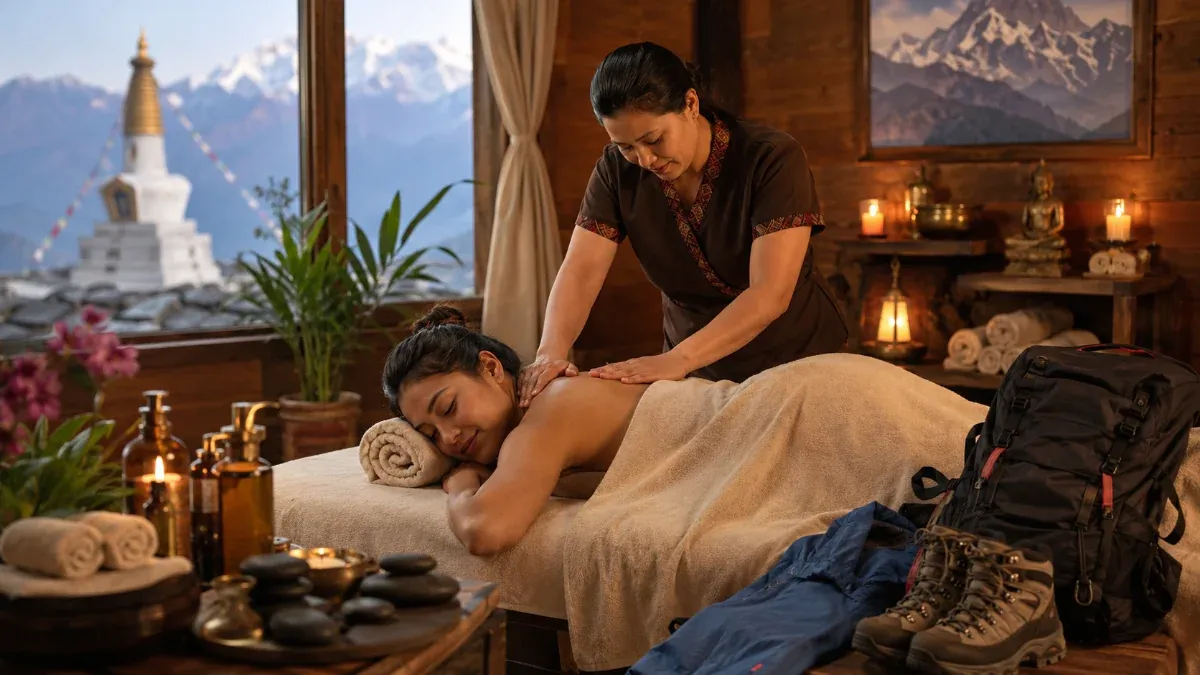
Finishing a trek in Nepal feels amazing, but your body may tell a different story. After days of climbing stone steps, walking steep trails, carrying a backpack, and spending hours on your feet, sore calves, tight shoulders, stiff hips, and tired feet are common.
A massage after trekking can be a relaxing way to deal with that post-trek stiffness and soreness. Research suggests massage may reduce delayed-onset muscle soreness after strenuous physical activity, although it should not be treated as a way to instantly repair muscle damage or restore athletic performance.
The right massage depends on how your body feels. Someone with general tiredness may prefer a gentle Swedish massage, while a trekker with tight calves and stubborn muscle tension may prefer more focused work.
Why Does Your Body Feel Sore After Trekking?
Trekking puts repeated stress on your legs, feet, hips, back, and shoulders. Long descents can be especially demanding because the muscles repeatedly work while lengthening to control each step.
That physical effort may lead to delayed-onset muscle soreness, commonly called DOMS. It often appears after unfamiliar or strenuous activity rather than immediately during exercise. Massage has been studied as one option for easing the feeling of post-exercise soreness, though results vary between studies.
After a trek, you may notice:
Tight calves and thighs
Sore feet
Stiff hips
Lower-back tension
Tight shoulders from carrying a backpack
General muscle fatigue
Reduced comfort when walking up or down stairs
These symptoms are different from a clear injury such as a sprain, fracture, severe swelling, or sharp pain.
Can Massage Help After Trekking?
Massage may help ease muscle soreness, stiffness, and the feeling of fatigue after demanding physical activity. Research on post-exercise massage has found some reduction in delayed-onset muscle soreness, but massage does not consistently restore muscle strength or physical performance.
For trekkers, that means massage is better viewed as a comfort and recovery option rather than a treatment that makes an injured muscle heal immediately.
It may feel especially helpful when your main problem is muscular tension rather than an injury.
What Is the Best Massage After Trekking?
There is no single best massage for every trekker. Your ideal choice depends on whether you feel generally tired, deeply tight, stiff, or sore in one particular area.
Here are some of the most suitable options.
1. Swedish Massage for General Soreness and Fatigue
A Swedish massage is a good starting point when your whole body feels tired but you do not want strong pressure.
It usually uses long, flowing strokes and light-to-medium pressure. This makes it suitable after a demanding trip when relaxation matters more than working deeply into one particular knot.
At Anura Spa, Swedish Massage is offered as one of its gentler full-body massage options.
Best suited for:
General post-trek tiredness
Mild muscle soreness
First-time massage guests
Travelers who prefer gentle pressure
Full-body relaxation after several days on the trail
If your muscles already feel tender, starting gently may feel better than immediately choosing very strong pressure.
2. Deep Tissue Massage for Tight Muscles and Knots
A deep tissue massage uses slower and firmer pressure to work on tight areas and deeper muscle layers.
It may suit trekkers who return with persistent tightness in the calves, thighs, lower back, shoulders, or other areas. Anura Spa also lists post-trek muscle tension among the reasons guests choose its Deep Tissue Massage.
Best suited for:
Tight calves or thighs
Shoulder tension from carrying a backpack
Persistent muscle knots
Stiff back muscles
People comfortable with firmer pressure
More pressure is not always better. If an area feels unusually painful, swollen, bruised, or injured, strong massage may not be suitable.
3. Thai-Stretching Massage for Stiffness and Mobility
Trekking does not always leave the body sore. Sometimes the bigger problem is feeling stiff.
A Thai-Stretching Massage combines pressure with assisted stretches and body movement. Anura Spa's Thai-Stretching treatment specifically lists trekkers with tight hips, legs, and shoulders among the people who may prefer this type of session.
Best suited for:
Stiff hips
Tight legs
Reduced flexibility after trekking
Travelers who prefer an active treatment
People who enjoy assisted stretching
Unlike a traditional oil massage, Thai-style massage usually involves more movement throughout the session.
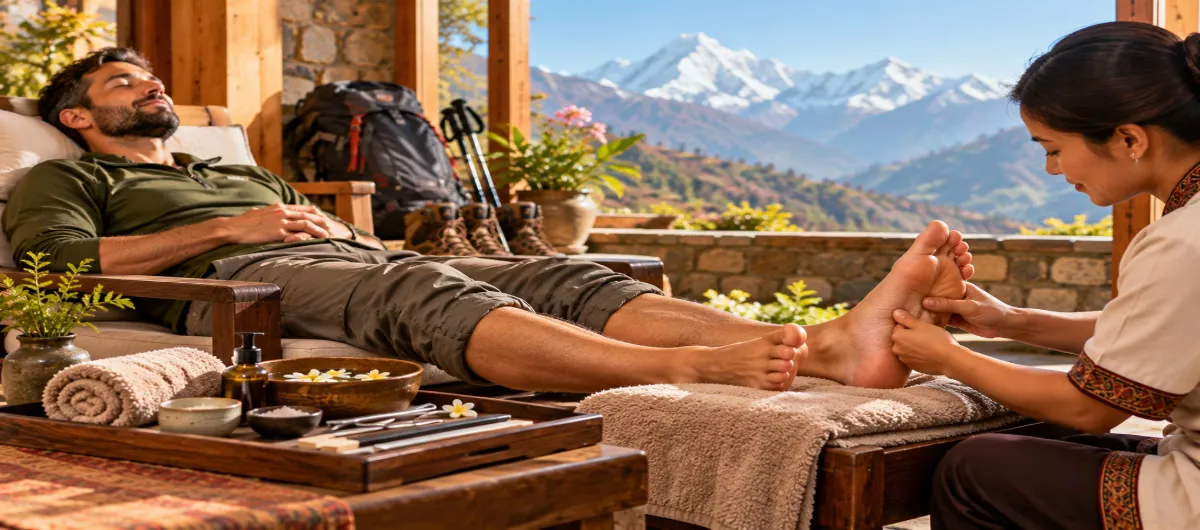
4. Foot Reflexology for Tired Feet
Your feet absorb thousands of steps during a trek.
If your upper body feels fine but your feet feel exhausted, a focused foot treatment may make more sense than booking a full-body session.
Foot-focused massage is especially appealing after routes that involve long descents, rocky trails, stone staircases, or several consecutive days of walking.
Best suited for:
Tired feet
General foot tension
Travelers who do not want a full-body massage
A shorter recovery session
However, massage should be avoided directly over blisters, open wounds, suspected fractures, or badly swollen areas.
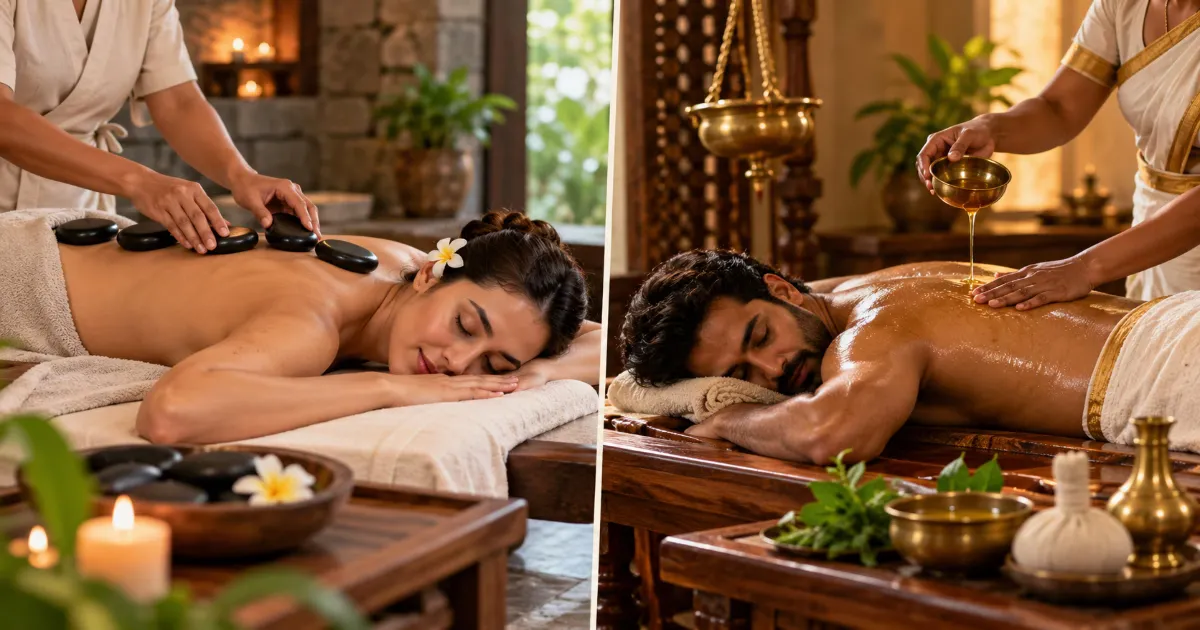
5. Hot Stone Massage for Warm, Gentle Relaxation
A hot stone massage combines massage techniques with warmed stones.
Many trekkers prefer warmth after spending several days in cold mountain conditions. Rather than choosing aggressive pressure, a warm massage can offer a slower and calmer way to unwind.
Anura Spa includes Hot Stone Massage among its massage treatments in Thamel.
Best suited for:
General muscle tightness
Travelers who enjoy warmth
Full-body relaxation
People who do not want very firm pressure
Swedish or Deep Tissue: Which Is Better After a Trek?
Choose Swedish massage when your main goal is gentle full-body relaxation. Choose deep tissue when you have specific areas of stubborn muscular tightness and are comfortable with firmer pressure.
A tired body does not automatically need strong massage.
For example, after several demanding trekking days, your legs may already feel tender. In that case, gentler pressure may feel better. A few days later, focused work may be more comfortable if certain muscles still feel tight.
Tell the therapist where you feel sore and how much pressure feels comfortable before the session begins.
Is Thai Massage Good After Trekking?
Thai massage may suit trekkers whose main problem is stiffness rather than tenderness. Assisted stretches and pressure can make it appealing for tight hips, legs, shoulders, and back after repeated days of walking.
However, it is a more active form of bodywork than Swedish or aromatherapy massage.
If you feel exhausted or very sore, a gentler session may be a better first choice.
When Should You Get a Massage After Trekking?
There is no fixed number of hours every trekker needs to wait.
How you feel matters more than following a strict timetable. If you have ordinary muscle tiredness without signs of injury, a comfortable massage may be suitable after finishing your trek.
Do not assume that severe pain is simply normal post-trek soreness.
Seek proper medical assessment instead of booking a massage when you have:
Sharp or worsening pain
A suspected sprain or fracture
Major swelling
Open wounds
Signs of infection
New numbness or weakness
Pain after a serious fall
Another condition for which a healthcare professional has advised against massage
Massage is generally considered low risk when performed by a trained practitioner, but stronger forms of massage may not suit everyone or every health condition.
Should You Get a Deep Tissue Massage Immediately After a Hard Trek?
Not necessarily.
Your muscles may already be tender after several days of demanding walking. Very firm pressure on highly sensitive tissue may feel uncomfortable rather than relaxing.
Start by telling your therapist:
Which trek you completed
How many days you were walking
Where you feel sore
Whether you fell or injured yourself
Which areas feel particularly sensitive
How much pressure you normally prefer
The therapist can then adjust the session around how your body feels that day.
What Should You Do Before a Post-Trek Massage?
Keep the period before your massage simple.
Drink water, eat normally, and give yourself some time to rest after arriving back from the trail. Showering and changing into comfortable clothing can also make the session more pleasant.
Most importantly, tell the therapist about injuries or unusually painful areas before the massage starts.
Do not hide pain because you think a stronger massage will fix it faster.
What Should You Do After the Massage?
Give yourself an easy evening if possible.
Drink according to your normal thirst, eat well, and allow your body to rest. There is no need to force huge amounts of water or follow complicated “detox” routines after a massage.
If an area becomes increasingly painful rather than simply mildly tender, pay attention to it and seek medical advice when needed.
Can You Combine Massage With Sauna or Steam After Trekking?
Some travelers enjoy combining a massage with sauna, steam, or quiet rest as part of their post-trek spa visit. Anura Spa offers sauna and steam services alongside massage treatments at its Thamel location.
Think about how you feel before adding heat.
After trekking, you may already be tired, dehydrated, or affected by altitude and travel. Rest and normal hydration should come first.
A long or very hot sauna session is not a replacement for recovery, food, fluids, or medical care when something feels wrong.
Finding a Post-Trek Massage in Kathmandu
Many travelers return to Kathmandu through Thamel after completing treks around Everest, Annapurna, Langtang, Manaslu, and other regions.
This makes Thamel a practical place to schedule a post-trek massage before your next journey or flight.
Anura Spa is located on JP Marga, Chaksibari Marg, Thamel, Kathmandu and offers Swedish, Deep Tissue, Thai-Stretching, Hot Stone, Ayurvedic, Aromatherapy, and other massage treatments.
Rather than choosing a treatment only by name, explain how your body feels. A therapist can then match the style and pressure to your preference.
Give Your Body Some Rest After the Trail
A Himalayan trek asks a lot from your body. Once the walking is finished, recovery does not need to be complicated.
Rest, regular meals, comfortable movement, sleep, and time all matter. A massage can be added when tired muscles and general stiffness are making it harder to fully relax after the trail.
At Anura Spa in Thamel, trekkers can choose from gentle full-body treatments, firmer massage, assisted stretching, and focused treatments depending on how their body feels.
Ready for some post-trek rest? Book your massage at Anura Spa in Thamel, Kathmandu, and choose a session based on how your body feels after the trail.
Frequently asked questions
- What massage is best after trekking?
- Swedish massage is a good choice for general tiredness, while deep tissue massage may suit stubborn muscular tightness. Thai-Stretching Massage is another option when stiffness and restricted movement are the main problems.
- Does massage help sore legs after hiking?
- Massage may reduce the feeling of delayed-onset muscle soreness after strenuous activity. Research is more consistent for reducing soreness than for restoring muscle strength or performance.
- Is deep tissue massage good after trekking?
- Deep tissue massage may suit tight muscles and persistent knots after trekking, but it is not automatically the best choice immediately after a demanding trek. Tender or injured areas may require gentler care or medical assessment instead.
- How soon after trekking can I get a massage?
- There is no universal waiting period for an ordinary relaxation massage after trekking. Base the decision on how your body feels, and avoid massage over an area that appears injured, badly swollen, infected, or unusually painful.