
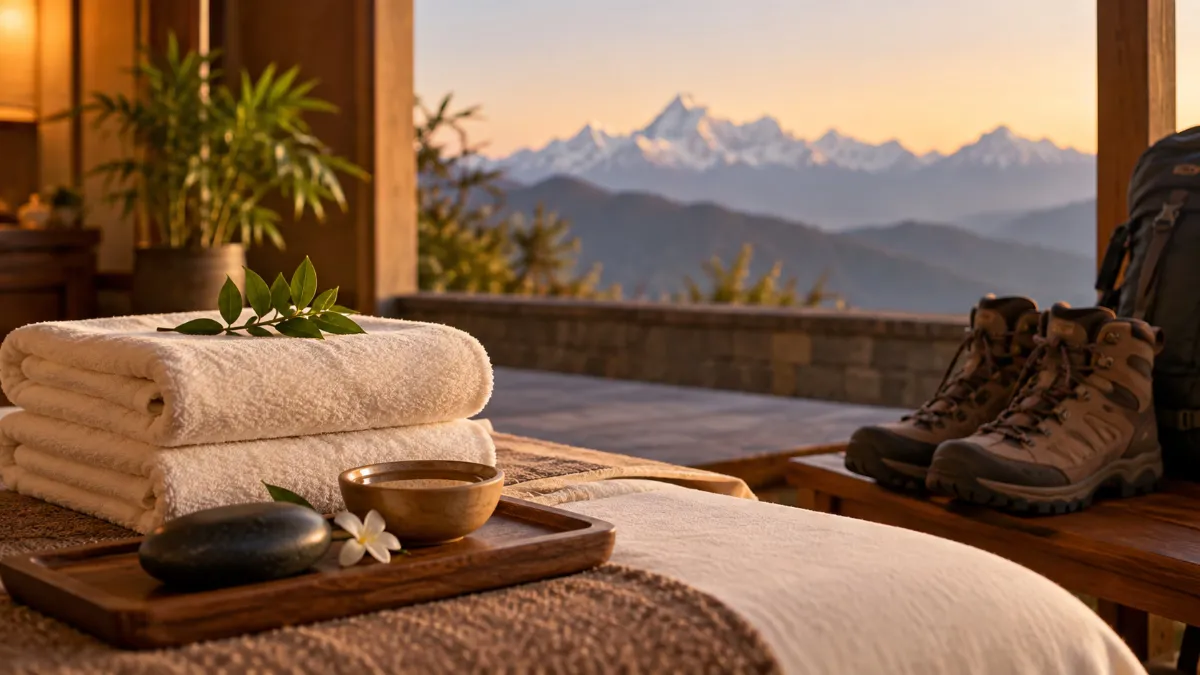
You book a spa before trekking to reach the trailhead loose and ready. Done wrong, the same session can leave you tender on day one, when the trail gives you no rest day to recover in. The treatment matters less than the timing, and a few options are better kept away from the final days before departure.
Why the 72 hours before trekking change which treatments help
Strong or unfamiliar massage can leave some people temporarily tender, especially when firm pressure is used on already tight or sensitive muscles. That is not the same thing as exercise-induced delayed onset muscle soreness (DOMS), and there is no universal 6-to-8-hour onset or 48-to-72-hour peak after massage. For a trekker, the practical point is simpler: the days immediately before departure are the wrong time to test a treatment that may leave you sore, heavy, or fatigued.
For a day hiker, mild post-treatment tenderness may barely matter. A multi-day trek removes much of that buffer. Day two stacks on day one with no full recovery day between stages, so any soreness you carry to the trailhead can compound instead of clearing. Book an unfamiliar, aggressive session shortly before departure, and you may discover how your body responds only after the trek has already started. That is why treatments that may suit post-trek recovery are not always the best choice immediately before one.
Four treatments worth booking before a trek
These share one trait: they are lower-intensity choices that can ease tension without aggressive pressure or unnecessary skin disruption close to departure.
Swedish massage at light or medium pressure
Swedish massage is one of the simplest pre-trek choices. At light to medium pressure, it focuses on relaxation and general tension rather than aggressive tissue work. Schedule it inside Anura Spa's 48-to-72-hour window, and the goal is to arrive comfortable and loose rather than testing how you respond to intense pressure.
Head, neck and shoulder massage
A loaded pack puts sustained pressure through the shoulders and upper back, so a head, neck and shoulder session can be a practical lower-intensity option for healthy guests when performed appropriately. It targets common pack-tension areas such as the upper trapezius, the levator scapulae, and the base of the skull, which makes it a low-friction default if you want focused work without a heavy full-body session before departure.
Foot reflexology without pedicure cutting
Reflexology applies focused pressure to the feet without cutting the skin or removing callus. That distinction matters before long days in boots. You get a dedicated foot treatment without introducing fresh cuts or aggressive skin removal immediately before sustained friction on the trail. Keep it to pressure work only, and leave cutting tools out of the session.
A short steam bath, 36 or more hours before departure
A short steam bath can feel soothing and relaxing before a trek. The main practical consideration is hydration: sweat loss varies with room temperature, session length, body size, and individual response, and starting a demanding trek dehydrated can increase perceived exertion. High-altitude travel also makes hydration management more important. Keep the session short, rehydrate normally afterward, and avoid prolonged heat immediately before departure. As a conservative house guideline, Anura Spa recommends finishing steam at least 36 hours before an early-morning start.
Five treatments to skip in the 72 hours before departure
Deep tissue massage
Deep tissue is not inherently dangerous before trekking, but it is a less forgiving choice close to departure if you do not already know how your body responds to firm pressure. Strong work can leave some people temporarily tender, and there is little upside in testing an aggressive treatment just before several consecutive days of walking. Save deep tissue for after the trek, or leave a wider buffer before departure if it is a treatment you already know well.
Cupping therapy
Cupping can leave temporary marks on the skin, and treated areas may feel tender or sensitive afterward. That matters when a hip belt or pack strap will sit over the same area for hours. The practical pre-trek issue is not a proven change in muscle glide; it is introducing fresh skin sensitivity exactly where sustained pressure and friction may occur. Leave cupping for a time when the treated area does not immediately have to sit under a loaded pack.
Hot stone massage
Hot stone massage is a heat-focused relaxation treatment, not an inherently unsafe pre-trek option. Still, it is less practical close to departure if you want to keep heat exposure, hydration variables, and post-treatment fatigue to a minimum. If the trek is near, a lighter, simpler massage is the more conservative choice; if you prefer hot stone, leave a wider buffer and pay attention to how you usually respond to heat.
Full pedicure with cutting and cuticle work
Skin integrity beats aesthetics when boots are about to stay on for six to eight hours a day. Cutting or forcefully pushing back cuticles can compromise the protective barrier around the nail and increase infection risk. Aggressive callus removal can also leave previously thickened skin more sensitive to friction. Trim or shape nails carefully if needed, but avoid cutting live skin, working on the cuticles, or stripping callus immediately before a long-distance trek.
Waxing near hip belt or pack strap contact zones
Freshly waxed skin can remain irritated or sensitive for a period after treatment. Wax the lower back, hips, or shoulders shortly before departure, and that irritation may sit directly under the contact zones your pack loads hardest. The practical problem is simple: friction on recently treated skin where you can least afford extra sensitivity.
Timing your spa before trekking by departure window
Match the treatment to how many hours stand between the table and the trailhead. The framework below is Anura Spa's conservative pre-trek booking guide, not a medical rule; individual responses to massage, heat, and skin treatments vary. The whole point of a spa before trekking is arriving primed, not sore.
Treatment | 5+ days out | 48-72 hours | 24 hours | Night before |
|---|---|---|---|---|
Swedish (light/medium) | Yes | Yes | Caution | No |
Head, neck, shoulder | Yes | Yes | Yes | Caution |
Foot reflexology (no cutting) | Yes | Yes | Caution | No |
Short steam bath | Yes | Yes (36h+ preferred) | No | No |
Deep tissue | Yes | No | No | No |
Cupping | Yes | No | No | No |
Hot stone | Yes | Caution | No | No |
Full pedicure (cutting) | Caution | No | No | No |
Waxing (contact zones) | Yes | No | No | No |
Five or more days out gives you the widest buffer, especially for treatments you already know your body tolerates well. Inside 48 to 72 hours, stay with lighter tension-focused work. At 24 hours, keep it simple. The night before, avoid anything intensive or likely to leave you dehydrated, tender, or irritated. Anura Spa's Trekkers Special Massage is built around this conservative window: light-to-medium pressure, common pack-tension zones, and the feet, without adding aggressive tissue or skin work immediately before day one.
Questions trekkers ask about spa visits before the trail
How many days before a trek should I get a massage?
Anura Spa recommends 48 to 72 hours before departure for anything beyond the lightest touch, but treat that as a conservative booking window rather than a medical cutoff. If firm pressure is unfamiliar to you, leave more time. Five or more days out gives you room for a wider range of treatments; inside 24 hours, keep the session light or skip it.
Is a steam bath safe the night before a trek?
A short steam session may be tolerated by some people, but the night before is not the conservative choice. Heat can increase sweat and fluid loss, and you do not want to start a demanding or high-altitude trek already thirsty or light-headed. Keep steam brief, rehydrate normally, and for an early departure Anura Spa recommends finishing it at least 36 hours beforehand.
Can I get a pedicure before a long-distance trek?
Yes, but keep it conservative. Avoid cuticle cutting, cutting live skin, and aggressive callus removal immediately before the trek. Careful nail trimming or shaping is fine as long as the skin is left intact and the nails are not cut uncomfortably short.
What happens if I get a deep tissue massage the day before a hike?
You may feel completely fine, but some people experience temporary tenderness after strong or unfamiliar pressure. The day before a hike is simply a poor time to discover that response. Keep deep tissue for after the trek, or leave a wider buffer before departure, as covered in our guide to the best massage after trekking in Nepal.
Does a sports massage before a trek help performance?
Do not book it expecting a direct performance boost. Research does not consistently show that massage improves strength, sprinting, endurance, or overall athletic performance, although it may help flexibility and how recovered or relaxed you feel. If you choose sports massage before a trek, ask for a light pre-event approach rather than aggressive pressure and use it for comfort and preparation, not as a promise of better trail performance.
Physical readiness, not indulgence, is the point of a spa before trekking. Explore Anura Spa's Trekkers Special Massage to see what a purpose-built pre-trek session covers, and whether it fits your departure window.