You come off the Annapurna Circuit with legs that have forgotten how to climb stairs, or you finish a punishing quarter at your desk and your shoulders sit up around your ears. Either way, you end up on Anura Spa's booking page, cursor hovering between two names. The choice between Swedish vs aromatherapy massage can feel like a coin toss because both are usually described as "relaxing."
The main difference is simple: Swedish massage relies on flowing strokes, kneading, and other hands-on techniques for full-body relaxation and muscle tension, while aromatherapy massage uses similar gentle bodywork with diluted essential oils added for a scent-based sensory experience. If muscle fatigue is the main reason you are booking, Swedish is usually the more straightforward choice. If you want relaxation with calming aromas as part of the experience, aromatherapy may suit you better.
Who Is Actually Choosing Between These Two Massages
Most people reading a Swedish vs aromatherapy massage comparison have already ruled out deep tissue and sports work. They want to leave the table calmer than they arrived. The uncertainty is not mainly about pressure or intensity - that is a separate question. It is about which of two overlapping relaxation treatments better matches what they want from the session.
Relaxation is the goal, but the label is doing the choosing
Both services promise relaxation, so it is easy to choose by vibe: aromatherapy sounds more indulgent, Swedish sounds more "classic." A better way to decide is to ask whether you mainly want hands-on work for general muscle fatigue and tightness, or whether you also want essential-oil aromas to be part of the relaxation experience.
What the two share before any differences matter
The overlap is larger than the marketing sometimes suggests. Both are typically full-body treatments performed with oil and light-to-medium pressure. Aromatherapy massage often uses soft, flowing strokes similar to Swedish massage. What changes is the addition of selected essential oils and scent.
How Swedish and Aromatherapy Massage Differ in Practice
The real difference is not a completely different set of hands-on techniques. It is what gets added to the massage.
The five Swedish strokes and what each does
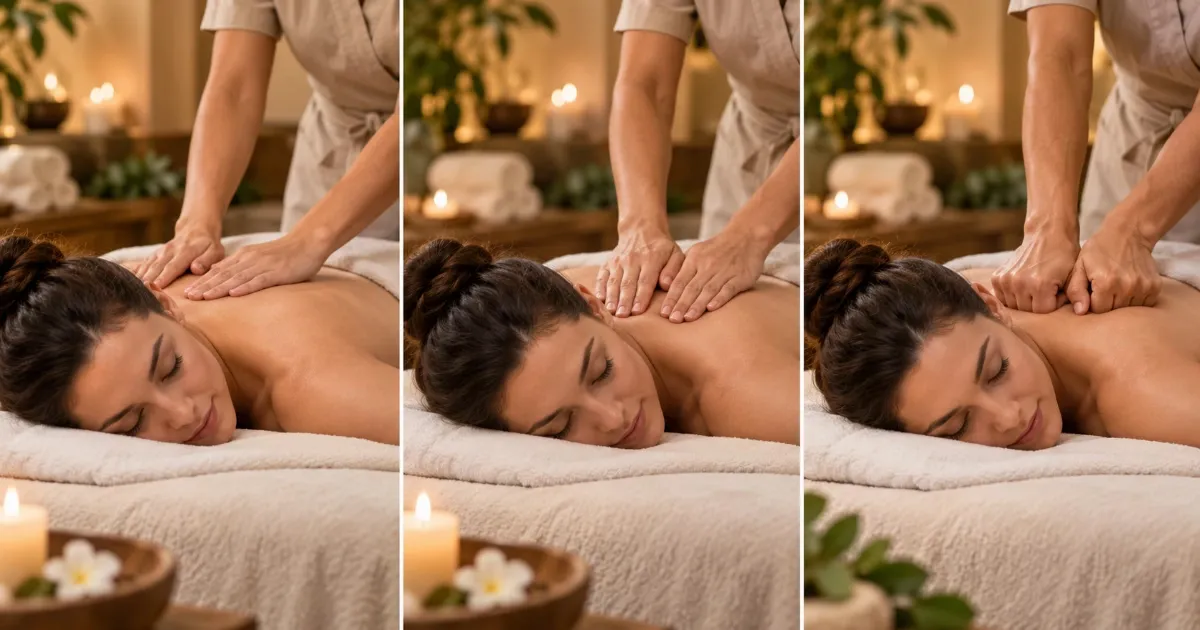
Swedish massage is commonly described through five classic stroke categories. Effleurage uses long, gliding passes to warm the body and settle into the session. Petrissage involves kneading, lifting, and rolling soft tissue. Friction uses smaller, focused movements over areas of tightness. Tapotement uses rhythmic percussion such as cupping or tapping, while vibration uses gentle shaking or trembling movements. Together, these techniques are used to promote relaxation and ease everyday muscle tightness. For a fuller breakdown of how firmly a therapist should apply them, the guide to massage pressure levels covers the light-to-firm range.
Aromatherapy adds a scent-based layer on the same gentle base
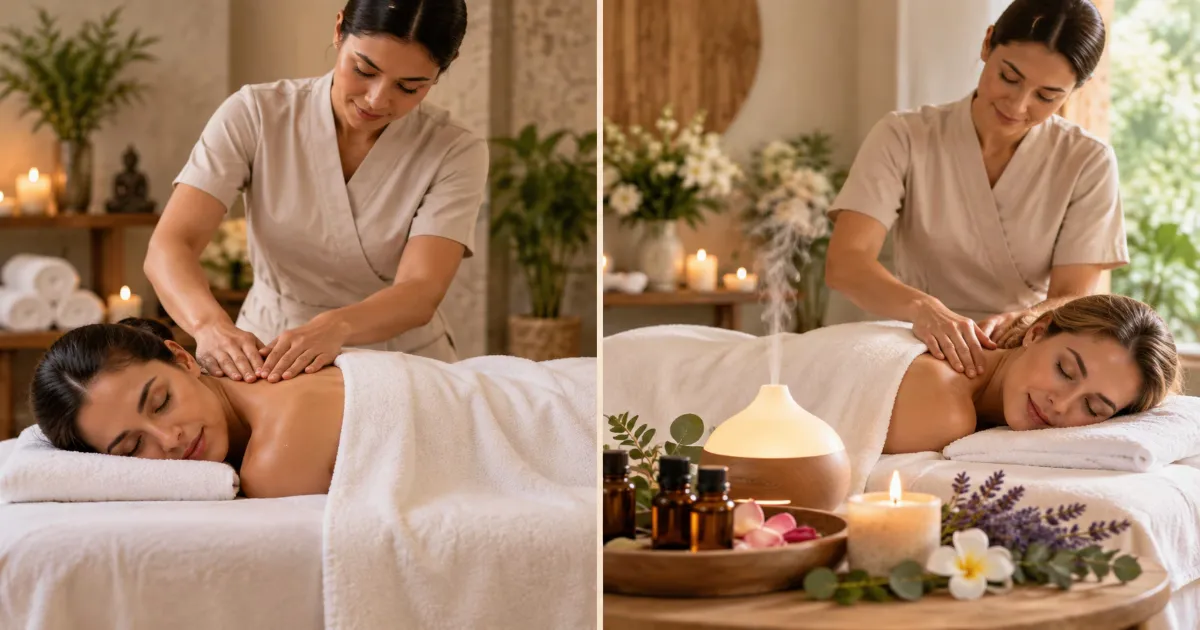
An aromatherapy session can use many of the same soft, flowing massage techniques, with diluted essential oils blended into a carrier oil. That addition changes the sensory experience. Swedish massage relies primarily on touch and movement; aromatherapy combines touch with scent. Research on inhaled aromatherapy suggests it may help with stress or anxiety in some clinical settings, but studies vary considerably and the evidence should not be treated as a guaranteed effect for every spa client.
Why a pleasant scent in the room is not the same as aromatherapy massage
Catching a pleasant fragrance in a treatment room is ambience. In an aromatherapy massage, essential oils are intentionally selected, appropriately diluted, and incorporated into the treatment rather than simply diffused somewhere in the room. The exact oils and method can vary by spa and by client preference.
Swedish vs Aromatherapy Massage Across the Booking Criteria That Matter
Criterion | Swedish massage | Aromatherapy massage |
Main experience | Classic full-body relaxation through hands-on massage | Gentle bodywork plus an essential-oil scent experience |
Muscle fatigue and everyday tightness | A straightforward choice when the body is the main concern | Can still relax muscles, but the scent element is a bigger part of the treatment |
Mental wind-down | Relaxation through touch, pace, and the overall spa environment | Relaxation through touch plus aromas that some clients find calming |
Essential oils | Not required; ask for an unscented carrier oil if preferred | Yes, diluted essential oils are part of the treatment |
Fragrance sensitivity | Usually easier to adapt by requesting unscented oil | May not suit people with fragrance or essential-oil sensitivities |
First massage | A simple, familiar starting point | A good option if you enjoy fragrance and have no relevant sensitivity |
Typical price | Check the current treatment price when booking | May cost more where premium oils are included; confirm the current rate |
For a first-time client who is unsure about essential oils, Swedish is often the simpler default because there are fewer scent-related variables to consider.
Swedish Massage: Best for Muscle Fatigue and Physical Tension
If the main complaint is in the body, Swedish massage is usually the more straightforward choice.
Post-trek soreness, desk strain, and locked shoulders
After a multi-day trek, calves, quads, feet, and shoulders can feel tired and stiff from repeated climbing, descending, carrying a pack, and long hours on uneven ground. Swedish massage uses long strokes and kneading that many people choose when they want general full-body relaxation after physical exertion. The same logic applies to desk-bound tension: when your neck, shoulders, and back simply feel tight after long hours at a laptop, hands-on massage gives the therapist a direct way to work across those areas. The full-body version is described on the Swedish massage service page.
Massage does not need a "lactic acid flush" explanation to be useful after activity. Research on post-exercise recovery has not shown massage to outperform active recovery for clearing blood lactate after strenuous exercise, so the better reason to book it is how the treatment feels and whether gentle-to-moderate bodywork matches your recovery preference.
When the body needs hands-on work more than a scent element
The test is simple: can you point to where you feel tired or tight? A stiff neck, a knotted-feeling back, or heavy trekking legs are good reasons to prioritise a hands-on relaxation massage. Aromatherapy can still be enjoyable, but the essential-oil element is optional rather than necessary when physical fatigue is the main reason you are booking.
Aromatherapy Massage: Best for Mental Relaxation and a Scent-Based Wind-Down
When the tension feels less localised - a busy mind, difficulty winding down, or general stress rather than one sore spot - aromatherapy may be more appealing. The distinction is not that essential oils "treat" stress at its source, but that scent becomes an additional part of the relaxation experience.
How scent may support relaxation
Smell is closely connected with brain systems involved in emotion and memory, which is one reason certain aromas can feel calming or familiar. A 2023 systematic review of inhalation aromatherapy in clinical settings found potential benefits for stress and anxiety, but also noted substantial variation between studies and risk of bias. The U.S. National Center for Complementary and Integrative Health similarly notes that research on aromatherapy and sleep is promising in some studies but that larger, more rigorous research is still needed.
What lavender, bergamot, chamomile, and eucalyptus are commonly chosen for
Essential oils are not interchangeable, and preferences matter. Lavender is widely chosen for a soft, calming scent and evening wind-down. A 2025 randomised trial found improved sleep measures and lower anxiety scores with lavender inhalation in a small group of postoperative patients with intracranial tumours, but those results should not be assumed to apply equally to healthy spa clients. Bergamot and chamomile are also commonly selected for calming aromatic profiles, while eucalyptus has a fresher, sharper scent that some clients prefer when they want something less sleep-focused. These are sensory preferences, not promises of a medical outcome.
When mental load is part of why you are booking
Aromatherapy makes the most sense when scent genuinely contributes to how you relax. If you have been travelling, sleeping poorly, or carrying sustained work stress and you know calming aromas help you switch off, the added sensory element can make the session feel more complete. The full range and treatment description are available on Anura Spa's aromatherapy massage page.
Which Massage to Book for Relaxation in Most Situations
A useful booking rule is to decide what you want the session to emphasise.
The practical call for physical versus mental stress
Book Swedish when muscle fatigue, stiffness, or general physical tightness is the main concern. Book aromatherapy when you want the same gentle relaxation style with an added scent experience. When both matter, ask whether a Swedish-style session can include an essential oil you already know you tolerate.
This is a booking guide, not a clinical rule. If you have a known fragrance or essential-oil allergy, scent-triggered migraine, sensitive skin, asthma, or another condition that could be affected by fragrance, tell the therapist before the session. An unscented Swedish massage may be the simpler option. For a deeper read on the restorative side of Swedish work, see the companion piece on Swedish massage for body and mind.
What to say before the therapist starts
Tell the therapist two things up front: what you want from the session and any sensitivities you have. If scent is a concern, ask for an unscented carrier oil. If you book Swedish but would enjoy a light aromatic element, ask whether a suitable essential oil can be added and confirm the product first. That short pre-session conversation helps the therapist tailor the experience without guessing.
Frequently Asked Questions
Is aromatherapy massage just a Swedish massage with scented oil added?
It can be similar in technique, but the essential oils are an intentional part of the treatment rather than incidental fragrance. At Anura Spa, aromatherapy massage combines soft, flowing full-body massage with selected aromatic essential oils. Exact techniques vary between spas, so the service description matters.
Which massage is better if I have a scent sensitivity or allergy?
Swedish massage with an unscented carrier oil is generally the simpler choice because it avoids the essential-oil component. Tell the therapist about any known fragrance, essential-oil, or skin sensitivity before treatment. Essential oils can cause skin irritation or allergic reactions in some people, even when they are used appropriately.
Can I ask for specific essential oils during an aromatherapy session?
Yes. Tell the therapist what kind of scent you prefer and what you want the session to feel like - for example, softer and more calming or fresher and more uplifting. Oil availability and blending practices vary, so confirm the options at check-in and disclose any known sensitivities first.
Does Swedish or aromatherapy massage work better after trekking in Nepal?
Swedish often makes more sense when general muscle fatigue and stiffness are the main reasons you are booking after a trek. Post-trek soreness does not need to be explained as "lactic acid buildup"; instead, choose based on whether you want straightforward hands-on relaxation or the same gentle experience with an added aroma component. If scent helps you unwind after days on the trail, aromatherapy can still be a good personal preference.
Is aromatherapy massage more expensive than Swedish at Anura Spa?
Anura Spa's current massage cost in Nepal guide lists Swedish massage at NPR 3,500 for 60 minutes, NPR 4,500 for 90 minutes, and NPR 5,000 for 120 minutes. Aromatherapy pricing can vary depending on session length and the oils used, so confirm the current treatment rate when booking rather than assuming both services cost the same.
How do I get some aromatherapy benefits if I book Swedish massage?
Ask before the session whether an essential oil that you already tolerate can be added to the carrier oil. Availability and any additional charge depend on the spa's current treatment options. If you have fragrance or skin sensitivities, staying with an unscented Swedish massage is the simpler choice.
Still unsure which massage fits what you want today? Take the Anura Spa massage quiz at anuraspa.com/tools/massage-quiz for a personalised recommendation in under two minutes.