One session slot in Kathmandu, two treatments to choose from: a full-body warm-oil massage, or a thin ribbon of warm oil poured steadily across your forehead for the better part of an hour. Most people settle the Abhyanga vs Shirodhara question on instinct, picking whichever name sounds more restful. Both treatments often use warm herbal oil, both are traditionally used to calm Vata, and both can leave you loose and unhurried afterward, so the sound of the word tells you nothing useful. What separates them is where the oil goes and which kind of rest you are looking for. When choosing at Anura Spa, start with a single question: is the thing wearing you down physical, or is it in your head?
Why the Same Oil Does Not Mean the Same Outcome
Pour identical sesame oil into two treatments and you can still walk out with two completely different results, because in Ayurveda the way oil is applied matters as much as the oil itself. These two therapies share a medium and part ways on method.
Abhyanga delivers oil across the skin, muscles, and joints
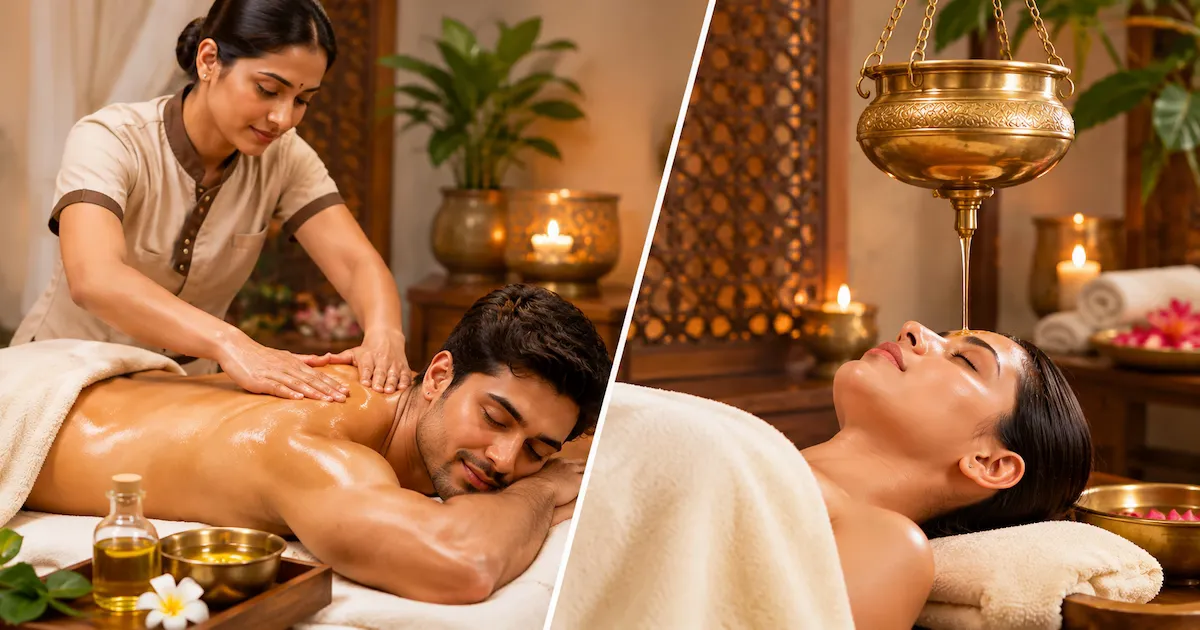
Abhyanga is full-body oleation. A therapist works warm oil into the skin with long rhythmic strokes that follow the direction of body hair, covering the scalp, limbs, torso, and joints during a full-body session. Warmth and friction can do several jobs at once: they soften dry skin, encourage relaxation, and ease the feeling of muscular stiffness that accumulates in a body under sustained load. The traditional approach is covered in Anura Spa's guide to Ayurvedic massage. The relevant point here is coverage: the treatment reaches almost every inch of you.
Shirodhara holds a warm-oil stream steady over the forehead
Shirodhara takes the opposite approach. Rather than moving oil everywhere, a continuous warm stream flows over the centre of the forehead, around the area traditionally associated with the third eye. In Ayurvedic practice, this ritual is linked with calm and mental balance; that is a traditional explanation, not a proven pathway to the brain. The oil never has to cover the body, because the aim here is a quieter sensory ritual rather than full-body coverage. Our Shirodhara explainer walks through the full ritual.
Abhyanga vs Shirodhara: Five Criteria Side by Side
Before matching a treatment to a goal, it helps to see both therapies against the same set of measures, including the safety line most pages skip.
Criterion | Abhyanga | Shirodhara |
|---|---|---|
Mechanism | Full-body warm-oil massage along hair direction | Continuous warm-oil stream on the forehead |
Primary target | Skin, muscles, physical relaxation | Quiet, forehead-focused relaxation |
Session length | Varies; confirm with Anura Spa | Varies; confirm with Anura Spa |
Dosha focus | Traditionally matched to dosha and oil | Traditionally associated with Vata balance |
Typical oil | Sesame or herbal oils; check availability | Herbal oils vary; check availability |
Check before booking | Fever or acute illness; wounds, clotting risks, recent injury | Pregnancy, acute sinusitis, low blood pressure, acute illness, head/neck injury |
The row that helps decide most bookings is the second one. Everything else is detail around that starting split between body and mind.
When the Problem Lives in Your Body, Book Abhyanga
Post-trek legs, dry winter skin, and knotted shoulders
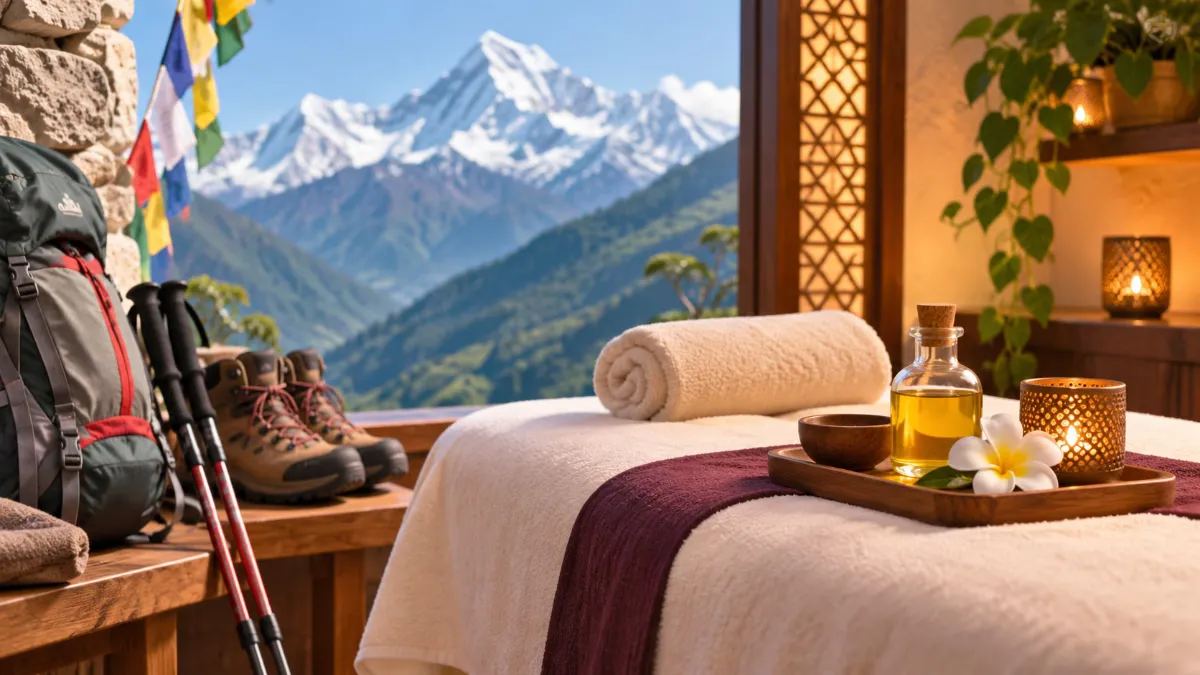
For a body that has just come off the Langtang or Everest Base Camp trail, tight calves, sun-dried skin, and joints that have absorbed days of downhill impact, Abhyanga is the session to book.A small, two-week Banyan Botanicals pilot study comparing daily oil self-massage with dry self-massage found that the oil group reported a 16.4% drop in perceived stress and a 27.9% drop in sleep-disturbance scores; the dry-massage group also reported some improvement in sleep. That gap is promising, but too small a study to prove that oil alone did the work. In Ayurvedic tradition, sesame oil is used to soothe aggravated Vata after exertion. Anura Spa's Ayurvedic treatments page describes the warm herbal-oil experience; ask which oils are available for your session.
Who should not book Abhyanga
A few cut-offs matter more than the rest. A heavy meal just before Abhyanga can make lying face-down uncomfortable, so arrive on a light stomach rather than a full one. Skip the session during an active fever or acute illness, and avoid massage over open skin wounds. Bleeding or clotting disorders, blood-thinning medication, oil allergies, and recent injuries call for a conversation with your healthcare professional and therapist before booking. These are safety checks, not rules to ignore because you want to relax.
When the Problem Lives in Your Mind, Book Shirodhara
How oil on the forehead may quiet a wired mind
Shotgun a harder massage at a racing mind and you will likely walk out feeling kneaded but not quieted. A small 2013 study in the Journal of Ayurveda and Integrative Medicine followed 16 healthy volunteers who received Abhyanga before Shirodhara. Researchers reported more EEG alpha activity, a pattern associated with relaxed alertness, alongside lower heart rate, respiratory rate, and diastolic blood pressure and improved mood scores. With no separate control group, those results cannot be credited to Shirodhara alone. The proposed mechanism remains a hypothesis, not proof that the oil directly resets the nervous system. For clients carrying everyday stress or restless nights, Shirodhara is traditionally chosen for a quieter, more meditative experience; oil choice varies by practitioner. Book directly on Anura Spa's Shirodhara page if that profile fits.
Who should not book Shirodhara
Acute sinusitis leads this list because it is easy to overlook when you are hoping for a quiet hour. If you have acute sinusitis, fever, or a flu-like illness, reschedule until you feel well. Pregnancy, low blood pressure, recent neck injury, and open or inflamed areas of the head or neck also call for avoiding Shirodhara unless a qualified healthcare professional advises otherwise. Do not swap in another massage during an acute illness just to keep the appointment.
When Both Belong in One Session
Sometimes the honest answer is both. When a full reset is the goal, body tired and mind frayed at the same time, a combined visit brings both experiences together: Abhyanga first, then Shirodhara. Set aside extra time and confirm the actual session lengths with Anura Spa before booking.
Why Abhyanga traditionally precedes Shirodhara in a combined session
The sequence comes from traditional Ayurvedic practice, not a proven rule of physiology. Abhyanga's full-body oil massage gives tired muscles and skin the first part of the session; Shirodhara then turns the pace down with its steady forehead stream. By the time the oil begins to pour, you have already spent time unwinding on the table. There is no good evidence that reversing the order cancels those effects. Massage first, then pour, if that is how your practitioner plans the visit.
Matching Your Goal to the Right Treatment at Anura Spa
The Abhyanga vs Shirodhara choice comes down to one honest question about your goal. This matrix, built from Ayurvedic principles by Anura Spa, maps the five scenarios clients raise most often to a treatment and a traditional oil example, subject to availability.
Your main problem | Book | Traditional oil example | Why |
|---|---|---|---|
Dry or stressed skin | Abhyanga | Sesame (check with spa) | Warm oil softens skin; traditionally Vata-grounding |
Post-trek body fatigue | Abhyanga | Herbal oil (varies) | May ease the feeling of muscle stiffness after exertion |
Work-related stress | Shirodhara | Varies by practitioner | Quiet forehead-oil ritual encourages a sense of calm |
Restless evenings | Shirodhara | Varies by practitioner | A restful ritual, not an insomnia treatment |
General reset | Both, if available | Confirm both oils | Two different relaxation experiences in one visit |
Read the table as a starting point. Dry skin but sleep is fine? Abhyanga alone is enough. Everyday stress is the loud problem and your body feels fine? Shirodhara may be the quieter choice. Only when both are shouting does a combined visit earn the extra time. Browse Anura Spa's Ayurvedic treatments, compare Abhyanga and Shirodhara, and confirm the treatment length and oil options before booking.
Specific Questions About Choosing Between These Two
Can I book Abhyanga and Shirodhara in the same visit, or is one session too much?
Yes, if Anura Spa offers the combination for your preferred time slot. Abhyanga is traditionally done first, followed by Shirodhara, but the total length depends on the sessions you choose. Ask for the actual booking duration, and tell your therapist if you tire easily so they can adjust the pace and pressure.
Which treatment is better if I have both skin issues and anxiety: do I have to choose one?
With enough time, you do not have to choose. A combined visit offers full-body oil massage for physical comfort and a quiet forehead-oil ritual for everyday stress; neither is a medical treatment for an anxiety disorder. With only one slot, pick by whichever need is louder that day. Skin-led, book Abhyanga; relaxation-led, book Shirodhara.
Is Shirodhara safe if I currently have sinus congestion or a cold?
It is best to postpone Shirodhara during acute sinusitis, fever, or a flu-like illness. If you have ongoing congestion or sinus symptoms, contact the spa before booking and seek medical advice if needed. Reschedule until you have recovered rather than switching to another massage while acutely ill.
How long should I wait after eating before an Abhyanga session?
Give yourself enough time after a heavy meal to feel comfortable lying down. There is no single medically established waiting period for Abhyanga, so follow any specific pre-treatment instructions from your therapist. A light snack is fine; a large lunch just beforehand is not.
Does the oil type used in Shirodhara change depending on whether I want to target stress or improve sleep?
Yes, the oil can vary with the tradition, practitioner, and what is available. Brahmi, Ksheerabala, and Dhanwantharam appear in different Ayurvedic practices, but no single oil has been shown to reliably treat anxiety or insomnia through Shirodhara. Your practitioner can explain the selection before your session.