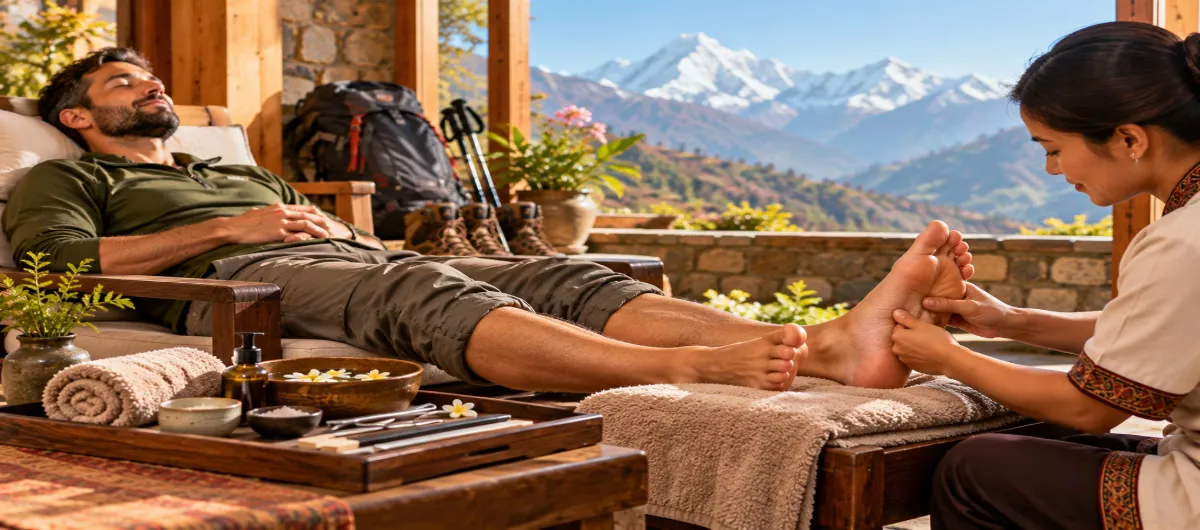
Seven hours on the Prithvi Highway leaves a signature on the body. By the time the bus grinds into Kathmandu or Pokhara, your hip flexors have been folded shut since morning, your lower back has absorbed a full day of engine and road vibration, and the base of your skull may carry a dull ache no trek ever produced.
Booking a massage after a long bus ride in Nepal can help ease much of that, especially if you choose the modality that matches the pattern of stiffness you actually feel. This is not the same as trekking soreness, and treating it exactly the same way can waste the session.
The distinction matters more than any spa menu suggests. Long trekking descents can produce exercise-induced muscle damage and tenderness in the quads and calves. A long mountain road ride does something quieter and more mechanical: prolonged sitting and whole-body vibration can fatigue the muscles that help stabilize you while keeping the hips in a flexed position for hours. Same body, different stress pattern, different session. It is not the cabin-pressure pattern of a long flight either.
What a Long Nepal Bus Ride Actually Does to Your Body
Research on professional drivers consistently links prolonged sitting, whole-body vibration, and awkward posture with musculoskeletal discomfort, especially around the lower back. Three stressors can stack up on a Himalayan road journey. First, sustained vibration from the engine and road can keep the lumbar paraspinals, the long muscles on either side of your spine, working for long periods as you brace and adjust.
Second, static hip flexion keeps the hip flexors in a shortened seated position, which can make standing fully upright feel stiff when you finally get off. Third, on long or high-altitude routes, low fluid intake and dehydration can add to the feeling of fatigue.
Common trouble spots include the hip flexors, the lumbar paraspinals, the upper-back muscles pressed against the seat or a loaded backpack, and the small muscles around the neck and base of the skull. Neck and upper-back tension may also contribute to the headache or head discomfort some travelers notice after a rough journey.
Why mountain road stiffness differs from trekking soreness
Reach for the trekking-recovery playbook and you may target the wrong pattern. Post-trek soreness often follows repeated eccentric loading on descents and can leave the quads and calves tender with delayed-onset muscle soreness. Bus-ride stiffness is more commonly associated with prolonged sitting, vibration, and sustained posture. Travel stiffness may respond well to gentle movement, assisted stretching, and targeted massage, while post-trek pressure should be adjusted to how tender the exercised muscles feel.
That difference helps guide which massage type you book, whether you need a little time to settle first, and what you tell the therapist when you walk in.
How the Prithvi Highway and jeep tracks compare
Not every route loads the body the same way. The Kathmandu to Pokhara run covers roughly 200 km of the Prithvi Highway in 7 to 10 hours; constant winding can keep you bracing and adjusting your posture. Kathmandu to Chitwan is shorter at about 5 to 7 hours, but congestion and winding sections can add motion-sickness fatigue on top of the stiffness.
The Pokhara to Jomsom jeep journey can run around 9 hours and includes rough gravel and dirt sections. Repeated jolting on those roads can leave the back feeling especially stiff and jarred, which matters when you are choosing a massage modality.
When to Book a Massage After a Long Bus Ride
You do not need to follow a fixed 60-to-90-minute rule after getting off the bus. If you arrive feeling generally well, a gentle session may be reasonable soon after arrival. If you feel braced, dehydrated, motion-sick, or simply unsettled, take some time to drink water, walk gently, eat if needed, and let the ride wear off before choosing firmer pressure.
How muscle guarding can affect pressure
Muscle guarding is an involuntary protective tightening that can happen around stressed or painful areas. Firm pressure on a spot that is acutely painful or strongly guarded may simply feel worse rather than more effective. Tell the therapist what you are feeling and start lighter if the area is tender; pressure can be adjusted as your body relaxes.
Signs you need rest or medical advice before massage
If you feel dizzy or nauseous from the winding descent, or you have sharp rather than dull pain, rest and rehydrate first and consider booking later. Severe or rapidly worsening back pain, new numbness or weakness, symptoms after a serious injury, or possible signs of a blood clot, such as one-sided leg pain and swelling after a long journey, are reasons to seek medical assessment rather than trying to work through the problem with deep massage. Massage safety guidance also recommends extra caution with acute injuries, blood clots, certain spine conditions, and recent surgery.
When in doubt, a shorter and gentler session now, followed by more targeted work once you feel settled, is a better choice than forcing deep pressure into a body that does not feel ready.
Choosing the Massage After a Long Bus Ride That Matches Your Stiffness
Match the modality to where it actually hurts, not to the spa's most popular listing. The mapping below is built around common patterns from prolonged sitting and road vibration rather than a generic recovery menu. On price, a 60-minute deep tissue session in Nepal runs roughly NPR 3,500 to 6,000 (about $23 to $40); the massage cost in Nepal guide lists the full range across session types.
Where it hurts | Likely travel factor | Massage to consider |
|---|---|---|
Locked, aching hips; hard to stand up straight | Hip flexors held in a shortened seated position | Thai stretching |
Deep lower-back band that will not release | Lower-back muscle fatigue from prolonged sitting and vibration | Deep tissue |
Back feels stiff after a rough jeep track | Repeated jolting plus sustained sitting | Spinal/back massage |
Whole-body tiredness, no single sore spot | General travel fatigue and possible dehydration |
Anura Spa's Trekkers Special Massage is designed primarily for post-trek recovery, but its blend of deep tissue work, Swedish strokes, and assisted stretching may also be adaptable when those techniques suit your post-travel stiffness. Tell the therapist clearly that your main issue is a long bus or jeep ride rather than trail soreness so the session can be adjusted accordingly.
Thai stretching for locked hip flexors and upper-back stiffness
Thai stretching can be a strong match for a bus-seated body. Its assisted stretching and movement can help restore mobility to the hips, shoulders, and spine after hours in one position. Where deep tissue focuses on stubborn muscular tension, Thai stretching emphasizes movement through comfortable ranges, which can suit that stuck, folded-shut feeling in the hips.
Deep tissue for lower back tension that won't release
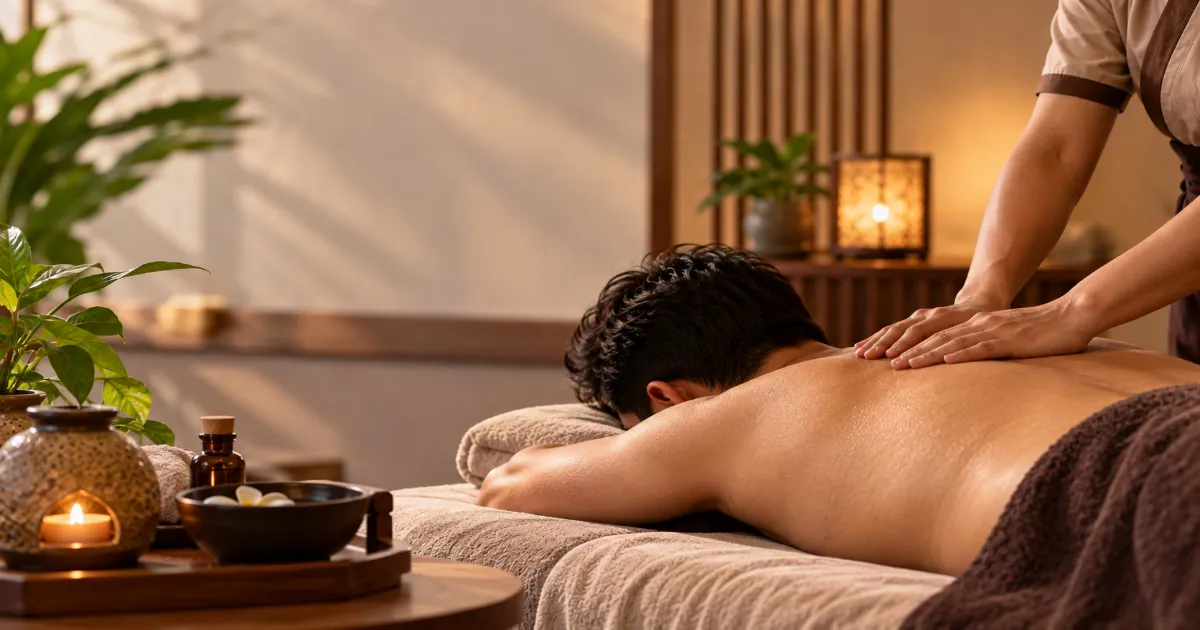
When the complaint is a deep band across the lower back that will not let go, deep tissue can be a useful option. Slow, focused pressure targets stubborn muscular tension around the lower back. It is best reserved for a body that feels settled and can comfortably tolerate firm pressure, and the therapist should adjust around any acutely tender area. Our back pain relief guide covers when deep tissue is and is not the right call.
Spinal massage for back stiffness after jeep roads
After a jarring jeep track, the muscles alongside the spine can feel tight, tired, and rigid from repeated jolting and sustained sitting. Spinal massage focuses on those muscles with controlled pressure, kneading, and gentle stretching. That makes it a targeted option when the back itself feels like the main problem after a rough road journey.
Swedish when gentle recovery beats corrective work
Sometimes nothing hurts in particular; you are simply wrung out. Long haul, poor sleep, altitude, dehydration, and a general heaviness with no focal sore point can make a gentler session more appealing. Swedish massage uses lighter, flowing strokes that support relaxation and ease general muscle tension without the intensity of corrective work. If your main goal is to unwind rather than target one stubborn area, deep tissue may be more pressure than you need.
What to Tell Your Therapist Before the Session Starts
A therapist who knows your route can target the session before laying a hand on you. Most travelers say “my back hurts” and get a generic full-body rub. Four details change that.
Four details that turn a generic session into targeted work
Give the therapist these before you lie down: the route you took, your total hours seated, the road type (paved versus dirt track signals different amounts of vibration and jolting), and the exact spot that hurts most. A smooth highway ride can feel very different from a rough gravel jeep track, and those details help the therapist decide where to start and how much pressure to use.
A nine-hour Jomsom jeep with broad mid-back stiffness may call for focused back work. A seven-hour highway bus with locked hips may call for more stretch-led work. Same hour on the table, two different priorities.
How Thamel therapists can adapt pressure for post-transit clients
Tell your Thamel therapist that the stiffness followed a bus or jeep ride rather than a trek. That simple detail helps them decide whether to start lighter, spend more time warming a tender area, prioritize hip mobility, or focus on the muscles alongside the spine instead of defaulting to a generic relaxation sequence.
After the Massage: Simple Steps That Can Help You Stay Comfortable
After the session, keep the rest of the day simple. If the road journey left you thirsty or dehydrated, resume normal hydration and eat a proper meal. Gentle movement can also feel better than immediately spending several more hours in the same seated position.
Water, a short walk, and the optional sauna step
Drink according to your thirst and normal hydration needs rather than treating water as a way to “flush toxins” from massage. If you feel steady on your feet, a gentle 10-minute walk can keep you moving without adding another hard load to already tired muscles.
A short sauna afterwards is optional and pleasant if the spa offers one, but it is a comfort add-on rather than a required recovery mechanism. Anura Spa's post-trek recovery tool can also help you think through a same-day recovery plan before you arrive in Thamel.
What to avoid after your session
If the journey left you dehydrated, alcohol can make that worse, so water and a proper meal are the better first choices. Likewise, if the massage leaves you relaxed or mildly tender, there is little benefit in immediately following it with a hard gym session or strenuous hike. Gentle walking is fine if it feels comfortable; let symptoms and energy levels guide the rest of the day.
Your Post-Ride Massage Questions Answered
How long should I wait after a bus ride to get a massage?
There is no universal evidence-based waiting period after a bus ride. If you feel settled and generally well, a gentle massage may be reasonable soon after arrival. If you are dizzy, nauseous, dehydrated, sharply painful, or still strongly braced from the journey, take time to recover first and consider a gentler session or a later appointment.
Is deep tissue safe right after a long jeep ride?
It can be appropriate for some people, but it is not automatically the best first choice. If the lower back simply feels tight and you tolerate firm pressure well, a therapist can adjust the session accordingly. If an area is sharply painful, acutely tender, or associated with numbness, weakness, or recent injury, skip deep pressure and get the problem assessed if needed.
Is bus-ride stiffness the same as post-trek soreness?
No. Bus stiffness is usually associated with prolonged sitting, sustained posture, and whole-body vibration. Trek soreness more often follows repeated muscular loading, especially eccentric work on long descents. Bus stiffness may respond well to movement, stretching, and targeted massage, while post-trek massage pressure should be adjusted to the tenderness of the exercised muscles. The two can overlap, but they are not identical recovery problems.
Which Thamel massage targets bus-seating hip and back pain?
Thai stretching can suit locked hips and movement restriction; deep tissue can suit stubborn muscular tension in the lower back; and spinal/back massage can target muscles alongside the spine after a rough jeep journey. Anura Spa's Trekkers Special is primarily a post-trek treatment, so if you book it after road travel, tell the therapist that the bus or jeep ride—not trekking—is the main reason you are there.
Can 60 minutes undo 7 hours of bus vibration?
A 60-minute session can be enough to focus on one dominant complaint, such as locked hips or a tight lower back. If you want the therapist to address several areas without rushing, a 90-minute session gives them more time. That is the practical logic of booking the right massage after a long bus ride in Nepal: choose pressure and technique for how you actually feel, explain the journey clearly, and give the therapist enough time to focus on the areas that need it most.
Start with the Trekkers Special Massage page if you are also recovering from trekking, or run the post-trek recovery tool to build a broader recovery plan before you reach Thamel.