Hot Stone vs Deep Tissue Massage: Which Should You Book?
You have carried the same knot under your shoulder blade for three months, or your lower back locks up on cold mornings and loosens by noon. Now you are looking at two booking options and trying to work out which one actually reaches the problem. The choice of hot stone vs deep tissue massage gets framed as relaxation versus intensity on most spa menus, and that framing is why so many people book the wrong one. The better question is how your body responds to warmth and pressure. This guide maps five body factors to a clear recommendation, and if you would rather answer a few questions than read, Anura Spa's massage quiz does the same in under two minutes.
Quick answer: Hot stone massage is usually the gentler choice when you prefer warmth, lighter pressure and relaxation. Deep tissue massage uses slower, firmer pressure and may suit persistent muscular tightness or specific areas you want a therapist to focus on. Neither is universally better; your pressure preference, symptoms and health history should guide the choice.
Why This Choice Is More Body-Specific Than It Looks
Most comparison pages line up benefits in two columns and leave you to guess. Hot stone relaxes, deep tissue treats pain, book whichever sounds nice. That tells you little about your body. Two people with "back pain" can prefer very different treatments: one may find that warmth and gentler pressure ease tightness, while another may prefer firmer, focused work. The decision turns on five things: the type of tension you carry, how much pressure you tolerate, how your body responds to warmth, what you want from the session, and any medical flags. Get those right and the hot stone vs deep tissue massage choice becomes much easier.
How Each Technique Works on Your Muscles
The mechanics help explain which bodies and preferences each massage may suit.
Hot Stone Massage: Basalt Heat and the Warmth-Softening Effect
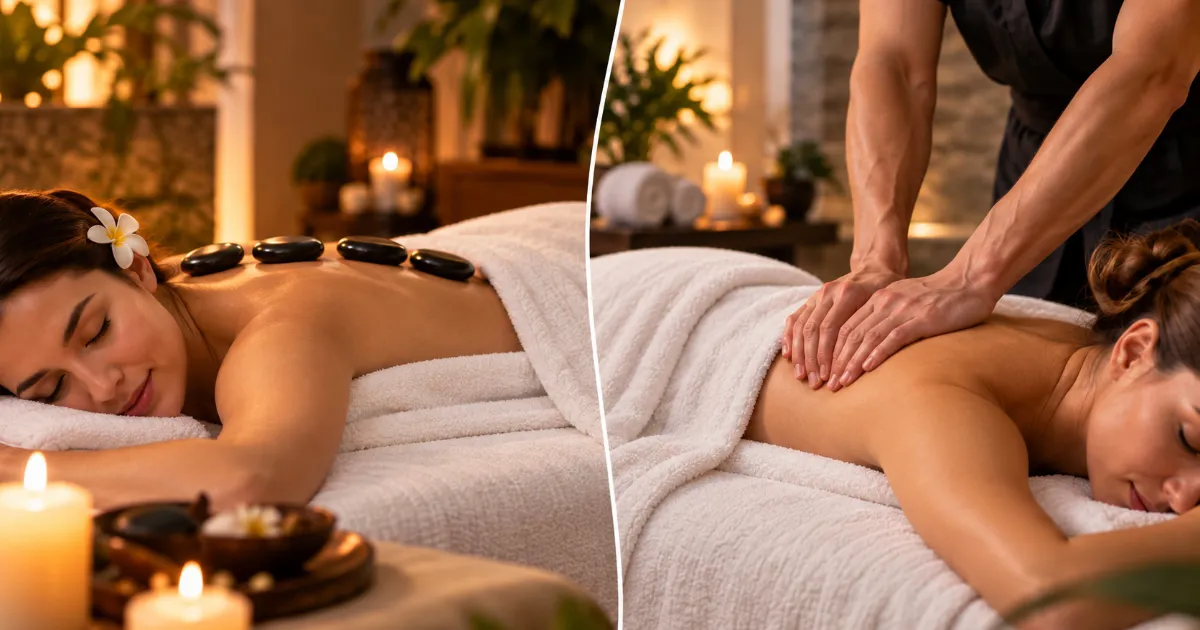
Smooth basalt stones hold heat well, and professional treatments use carefully controlled warmth rather than one universal stone temperature. Massage-therapy safety guidance commonly places heating-unit water at roughly 110–130°F (43–54°C), while the therapist checks the stones by hand and monitors your comfort. Heat can temporarily increase local skin blood flow and make tissues feel warmer and more pliable, allowing comfortable work with lighter to moderate pressure. For the full rundown, see our guide to the benefits of hot stone massage; here the point is narrower: warmth is part of the treatment mechanism, not just the mood.
Deep Tissue Massage: Slow, Focused Pressure on Persistent Tightness
Deep tissue is not simply harder. It typically uses slower strokes and sustained, targeted pressure to work into areas of persistent muscular and connective-tissue tension. Cross-fiber friction may be one technique, but it is not the only defining move. Therapists often focus on areas such as the shoulders, back, hips and legs, adjusting the pressure to your comfort rather than using maximum force for its own sake.
Five Body Factors That Point You Toward One Massage
Type of Tension: Heat-Responsive Stiffness Versus Persistent Tightness
Pay attention to what reliably makes the area feel better. If warmth usually helps and you prefer gentler pressure, hot stone may suit you. If the tightness is persistent and you respond well to firm, focused pressure, deep tissue may be the better fit. This is a preference and symptom pattern, not a way to diagnose the cause of pain at home.
Pressure Tolerance and How Your Body Handles Post-Session Soreness
Some people experience mild tenderness for a day or two after firm deep-tissue work, while hot stone usually uses lighter to moderate pressure and is less likely to leave you sore. Low pressure tolerance, or the need to feel comfortable before an event or travel day, can settle the question on its own. Our guide to massage pressure levels helps you gauge where you sit before you book.
Body Temperature Regulation and Cold-Triggered Muscle Tightness
If your muscles consistently feel tighter in cold conditions and more comfortable once you warm up, hot stone may be especially appealing. That pattern can be noticeable during Kathmandu winters or after time at altitude, although persistent or unexplained pain should not be self-diagnosed from temperature response alone.
Your Goal: Stress Recovery Versus Focused Muscular Work
If the priority is slowing down, feeling warm and unwinding from travel or stress, hot stone is usually the more relaxation-focused choice. If you want a therapist to spend more time on persistent muscular tightness, repetitive-use tension or specific overworked areas, deep tissue offers more focused pressure. For a recent injury, severe pain or active rehabilitation plan, check with an appropriate healthcare professional before booking firm massage.
Medical Conditions That May Change the Choice
Hot stone needs extra caution if you have reduced temperature sensation, peripheral neuropathy, diabetes that affects sensation, active sunburn or open skin, or a condition for which your clinician has advised you to limit heat. If you are pregnant, tell the spa when booking so a therapist trained in prenatal care can adapt positioning, pressure and heat appropriately. Deep tissue may need to be avoided or modified with clotting or significant bleeding risk, acute inflammation, fresh bruising, osteoporosis, or recent surgery or fracture. When in doubt, ask your clinician and tell your therapist about relevant medical conditions before the session.
Hot Stone vs Deep Tissue: Criterion-by-Criterion Breakdown
Here is the hot stone vs deep tissue massage decision on one screen:
Criterion | Hot Stone Massage | Deep Tissue Massage |
Technique mechanism | Heated basalt stones plus massage create sustained warmth and allow comfortable work with lighter to moderate pressure | Slow, sustained and targeted pressure focuses on persistent muscular and connective-tissue tightness |
Pressure depth | Light to moderate | Moderate to firm, adjusted to comfort |
Best-for body scenario | Heat-responsive stiffness, cold-triggered tightness, relaxation and stress recovery | Persistent muscular tightness, postural or repetitive-use tension, focused work on specific areas |
May need modification or avoidance | Reduced heat sensation, neuropathy, diabetes affecting sensation, active skin irritation, conditions requiring heat restriction | Clotting or significant bleeding risk, acute inflammation, fresh bruising, osteoporosis, recent surgery or fracture |
Typical post-session feeling | Warm, calm and loose, usually with minimal soreness | Looser and worked-through; some people notice mild tenderness for a day or two |
At Anura Spa, tell your therapist where you feel tight, whether warmth tends to help, and how much pressure you enjoy; the session can then be adjusted around your comfort and goals.
Hot Stone Massage: Right When Warmth Is the Problem-Solver
Hot stone earns its place whenever warmth and gentler pressure are what your body responds to best. Take a hiker back from a trek in Nepal with generally tired, stiff legs: if the priority is comfortable recovery and relaxation rather than intense pressure, warmth can make the session especially soothing. Choose hot stone when your tension feels heat-responsive or stress-driven, and when a calm, low-soreness session matters more than concentrated pressure. If you have just returned from the trail, our guide to the best massage after trekking in Nepal can help you compare recovery options. Book hot stone on the Anura Spa hot stone massage page.
Deep Tissue Massage: Right When You Want Focused Pressure
Now consider the desk worker whose right shoulder has been climbing toward their ear for a year. Months at a keyboard can leave the muscles around the shoulders and upper back persistently tight, and warmth alone may feel temporary. Deep tissue gives the therapist more scope to spend time on those areas with slow, firm, well-directed pressure. Persistent, postural or repetitive-use muscular tension is where deep tissue is most useful as a massage choice; pressure should always stay within a tolerable range. Book it on the Anura Spa deep tissue massage page.
For Back Pain: Which of These Two Massages Fits Better?
Back pain is rarely a one-size-fits-all massage question. If warmth reliably makes muscular tightness feel more comfortable and you prefer gentler pressure, hot stone may be the more comfortable option. If you prefer firmer, focused work on persistent muscular tension, deep tissue may suit you better. Research suggests massage and manual myofascial techniques can provide short-term relief for some people with low-back pain, but the evidence does not establish that one massage style is universally best. New, severe, radiating or unexplained back pain should be assessed by a qualified healthcare professional. Our guide to the best massages for back pain relief breaks the options down further.
Your Questions on Choosing Between Hot Stone and Deep Tissue
Can I Get a Hot Stone Massage With High Blood Pressure or Diabetes?
It depends on how well the condition is controlled and whether it affects heat sensation. Diabetes-related neuropathy or any reduced temperature sensation is an important caution because you may not reliably feel when a stone is too hot. Uncontrolled high blood pressure or other cardiovascular concerns should be discussed with your clinician before heat-based treatment. If your condition is well managed, tell your therapist so temperature and pressure can be adapted appropriately.
Will I Be Sore After Deep Tissue Massage, and for How Long?
You might be. Some people notice mild, post-workout-style tenderness for 24 to 48 hours after firm work, while others feel little or no soreness. Significant pain is not the goal. Soreness that is severe, sharp or worsening should not be treated as a normal result of massage.
Is My Muscle Tension Surface-Level or Deep Enough for Deep Tissue?
You do not need to diagnose the depth of your tension yourself. If warmth and lighter pressure make the area feel better, hot stone may be a good fit. If you like firm, focused pressure on persistent tight areas, deep tissue may suit you better. A therapist can also adjust the treatment after discussing where you feel tension and how much pressure you tolerate.
After Trekking in Nepal, Hot Stone or Deep Tissue?
For general post-trek tiredness, stiffness and relaxation, hot stone can be an excellent choice. If your legs, shoulders or back have specific persistent tight spots and you enjoy firmer pressure, deep tissue may be more suitable. Massage should not be described as "flushing metabolic waste"; current sports-massage research supports benefits such as perceived recovery and reduced soreness more than faster lactate clearance. A tailored session can also combine gentler warming work with focused pressure where you need it.
Can a Therapist Combine Hot Stone and Deep Tissue in One Session?
Yes, depending on the spa's treatment format and your health history. Warm stones can make the early part of a session comfortable before the therapist applies firmer, more focused pressure to selected areas. Tell the therapist that you want both relaxation and targeted work so the temperature and pressure can be adjusted to your comfort.
Still unsure which to book? Take Anura Spa's free massage quiz for a personalised recommendation based on your body and goals, with results in under two minutes.