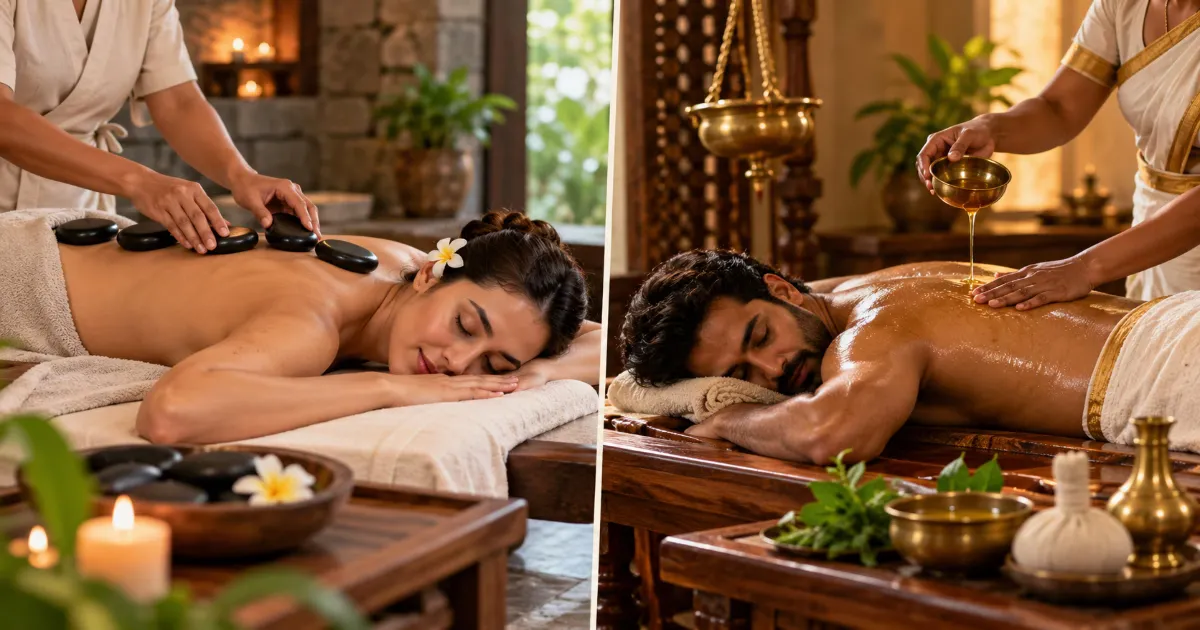
You've come down from a trek or off a long-haul flight into Kathmandu, and the Anura Spa menu offers two warm treatments that both promise deep relaxation. The hot stone vs Ayurvedic massage decision stalls most guests right here, because both use heat and both sound restorative. They are not two versions of one idea. One uses concentrated warmth alongside massage for tighter areas; the other uses generous warm oil and rhythmic full-body strokes for a slower, restorative experience. Book by what your body actually needs today, not by which sounds more indulgent.
Where hot stone and Ayurvedic massage overlap, and where they part
Some Ayurvedic traditions and spas use the term Shila Abhyanga for treatments that combine warm oil and heated stones. On a Kathmandu spa menu, however, hot stone and Ayurvedic massage can sit as two separate bookings with different techniques and intentions. Both use warmth, and both can feel deeply relaxing. That is where the similarity stops. Modern hot stone massage uses heated stones as part of hands-on muscle work. Ayurvedic massage is a full-body oil ritual rooted in the Ayurvedic tradition. Confuse them at the booking desk and you can easily get the wrong one for the experience you want.
How hot stone massage works
Basalt, temperature, and placement
Hot stone therapy commonly uses smooth basalt stones because they hold heat well. The stones are heated in temperature-controlled water. The American Massage Therapy Association (AMTA) notes that water around 110 to 130°F (about 43 to 54°C) is generally used to bring massage stones to an appropriate temperature, and a therapist should be able to hold a stone comfortably before using it. Depending on the technique, heated stones may be placed over a towel or sheet or moved as extensions of the therapist's hands.
What the heat does to muscle
Warmth can increase local skin blood flow and make tight tissue feel warmer and more pliable before pressure is applied. That combination of heat and massage is the core of what hot stone offers. If your right shoulder tightened under a daypack, for example, the therapist can spend more time using warmth and massage around that area rather than treating the session as a single full-body ritual.
How Ayurvedic massage works
Warm oil, abhyanga, and dosha-informed personalization
Ayurvedic massage centers on abhyanga, a traditional full-body warm-oil massage that uses long, continuous, rhythmic strokes. In traditional Ayurveda, oil, warmth, and rhythm may be adapted according to a person's constitution, season, and needs. Sesame oil is commonly associated with vata, while lighter or cooling oils may be chosen for pitta or kapha depending on the practitioner. The exact intake and oil-selection process varies by spa and therapist, so you do not need to know your dosha before booking.
Rhythm and full-body relaxation
Kneading one knot loose is not the main aim. Sustained rhythmic contact and generous warm oil make the session feel more whole-body and restorative. Massage research suggests relaxation and short-term stress benefits in some settings, although the mechanisms are not fully understood. A small 20-person pilot study of Abhyanga reported reduced subjective stress and lower heart rate after a one-hour session, while also calling for stronger research. Where hot stone can be directed toward a tight area, abhyanga is built around the experience of the whole body.
Hot stone vs Ayurvedic massage across five criteria
Five practical differences separate the two once you are on the table.
What differs | Hot stone | Ayurvedic abhyanga |
|---|---|---|
Pressure and sensation | Warm, focused massage; pressure adjusted to comfort | Usually gentle to moderate; continuous oiled strokes |
Heat source and reach | Heated basalt stones used for localized or broader warmth | Warm oil spread across the body |
Session focus | Can spend more time on specific tight areas | Whole-body rhythmic sequence |
Personalization | Stone temperature and pressure adjusted to comfort and health history | Oil and rhythm may be adapted; exact process varies by therapist and spa |
Risk profile | Extra caution with heat sensitivity or reduced sensation | General massage and skin-sensitivity precautions; oil allergies should be disclosed |
Who should skip each
Disclose your health history before you book. General massage precautions include acute illness, active skin infection, fresh injury, recent surgery, and conditions that increase the risk of bleeding or injury. Hot stone requires extra caution when heat sensation may be reduced, including neuropathy or some cases of diabetes, and with certain heart, skin, pregnancy, or recent-surgery considerations. AMTA emphasizes a thorough intake for hot stone treatments, while the National Center for Complementary and Integrative Health (NCCIH) advises discussing massage with a health-care provider when you are unsure whether it is appropriate for a medical condition.
The hours after: residue and recovery
Here the difference becomes something you plan your evening around. Hot stone massage is not centered on leaving a heavy oil coating, although oil or lotion may still be used for glide. Abhyanga uses generous warm oil as a central part of the treatment, so some residue may remain on your skin afterward. Give the oil a little time before a warm shower and follow your therapist's aftercare advice. If you are heading straight to dinner or changing into delicate clothes, that practical difference matters.
Hot Stone Massage: Better When You Want Warmth and Focused Muscle Work
Book hot stone when you can point to where you feel tight. A specific knot, a stiff neck after a rough road, or tired calves after a long descent may all make a warm, more focused treatment appealing. The hot stone massage benefits that matter here are the soothing warmth and the ability to combine it with targeted massage, rather than a promise to fix a musculoskeletal problem.
Ayurvedic Massage: Better When You Want Warm Oil and Full-Body Relaxation
When nothing hurts in particular but you feel worn down after days in motion, abhyanga may be the better fit. The Ayurvedic massage benefits are better framed as a warm, rhythmic, whole-body relaxation experience with skin conditioning from the oil. If your main goal is to slow down rather than concentrate on one tight area, that difference can make the choice much easier.
Which treatment fits what your body needs right now
The hot stone vs Ayurvedic massage choice comes down to what state your body is in, not which treatment is objectively better. Use the contrast between focused stone warmth and whole-body oil work as the practical guide.
Your body state | Book |
|---|---|
Post-trek lower-body tightness or ordinary muscular soreness | Hot stone |
General travel stress or mental fatigue | Ayurvedic |
Dry-feeling skin and a preference for generous warm oil | Ayurvedic |
Post-flight fatigue when relaxation is the goal | Ayurvedic |
No specific complaint, pure decompression | Either; choose by the sensation and oil experience you prefer |
Sore from the trail or the flight
For ordinary muscular aches you can name and locate, hot stone is often the more intuitive booking. Trekking and long periods of sitting can leave the calves, quads, shoulders, or lower back feeling tight, and the added warmth may make those areas feel more comfortable while the therapist works on them.
When you feel wired and tired
If your main problem is feeling overstimulated and exhausted rather than one specific tight muscle, you may prefer the slower, whole-body rhythm of abhyanga. The aim here is relaxation and a quiet, restorative experience, not a claim that massage can reset the nervous system or correct the biological cause of jet lag.
No complaint, just decompression
With nothing specific to treat, either works. Choose hot stone if the sensation of sustained stone warmth appeals to you; choose abhyanga if you want generous warm oil and a slower whole-body ritual. For something deeper still, shirodhara extends the warm-oil experience with a steady stream across the forehead.
Common questions about hot stone vs Ayurvedic massage
Can I book hot stone and Ayurvedic massage back-to-back in the same visit?
Some spas may be able to combine elements of both treatments in a longer visit, but it is better to ask before booking rather than assume a fixed sequence. Treatment length, total heat exposure, oil use, and your health history can all affect whether combining them is appropriate. If you want both experiences, let the spa recommend the safest and most comfortable order for you.
Does the warm oil from an Ayurvedic massage stay on your skin after the session?
Yes, some oil may remain on your skin afterward, and that is part of the experience. The National Ayurvedic Medical Association describes allowing oil from self-abhyanga to sit for about 10 to 15 minutes before showering. After a professional spa session, follow your therapist's aftercare advice and wear clothes you do not mind lightly oiling on the way home.
Which treatment is better for jet lag or fatigue after a long flight or trek?
For general post-flight fatigue, Ayurvedic massage may suit you if what you want is a slow, warm, full-body treatment. Massage does not reset the body clock or cure jet lag, as explained in Anura Spa's guide to massage after a long flight. Hot stone may be the more natural choice when your main issue is ordinary localized muscle soreness from the climb. If you have significant headache, nausea, unusual breathlessness, dizziness, or worsening symptoms at altitude, seek medical advice rather than treating those symptoms as routine massage needs.
Is hot stone massage painful if I have muscle knots or tight shoulders?
A properly performed hot stone massage should not feel painfully hot. The warmth can make tight areas feel more comfortable before and during massage, but pressure should still be adjusted to your preference. Speak up immediately if a stone feels too hot or the pressure is uncomfortable so the therapist can change it.
What type of oil is used in Ayurvedic massage and will it cause breakouts?
Sesame oil is traditionally associated with vata, while coconut or sunflower may be used for pitta and mustard or lighter oils may be used for kapha depending on the practitioner. Herbal infusions are also common. Whether an oil causes irritation or breakouts depends on the product and your skin, so mention acne-prone areas, sensitive skin, or known allergies before the session.
Not sure which one your body is asking for today? Take the Anura Spa massage quiz for a personalised recommendation in under two minutes, then book your hot stone or Ayurvedic session directly.