Ayurvedic vs Swedish Massage: Which Should You Book?
You are standing in front of the spa menu with two oil massages listed side by side, and they sound almost interchangeable. They are not. The Ayurvedic vs Swedish massage decision comes down to a practical question most first-time visitors never think to ask: what does your body need in the next few hours, not just on the table? One session sends you back into your evening clean and loose. The other asks you to slow down and let warm herbal oil finish its work. Get that mismatch wrong and even a skilled massage leaves you a little frustrated. If you would rather see the two treatments side by side while you read, they are both on the Anura Spa massage menu.
Why this choice trips up first-time spa visitors
Most guides frame the Ayurvedic vs Swedish massage question as ancient India against nineteenth-century Europe and stop there. That history is real, but it books you nothing. The confusion is practical: both use oil, both run 60 to 90 minutes, both promise relaxation, so the labels blur together on the menu. What actually separates them is how the oil is used, how the pressure gets chosen, and, most overlooked of all, what happens after you climb off the table. Once you can see those three levers, the choice stops being a coin toss.
What Ayurvedic massage actually does to the body
Warm oil, poured and worked into the skin, carries the experience in Ayurvedic bodywork. It is not incidental to the technique; it is a central part of the treatment.
Abhyanga: warm herbal oil is the treatment
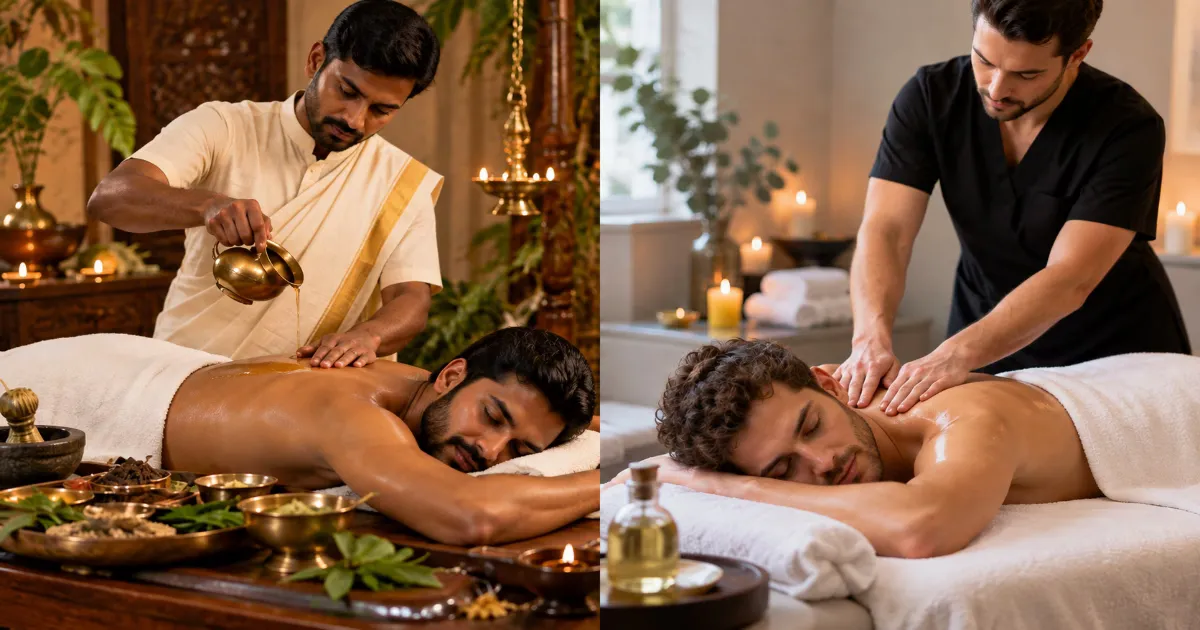
Abhyanga is the primary full-body Ayurvedic massage, and it is what people usually mean when they say "Ayurvedic massage" without naming it. A therapist applies warm, herb-infused oil using rhythmic flowing strokes, kneading, and circular motions around the joints. In Ayurvedic tradition, the sequence can include marma points, which are traditionally regarded as important points in the body, rather than following the same muscle-focused approach used in Western massage. That difference is why you cannot recreate Abhyanga simply by asking a Swedish therapist to heat the oil. The direction, rhythm, and sequence come from a different tradition.
Warm herb-infused oil is considered an essential part of Abhyanga in Ayurvedic practice. The warmth also makes the treatment soothing and leaves the skin feeling conditioned, rather than serving only as lubrication.
How your dosha can shape the oil, temperature, and stroke rhythm
Ayurveda describes three doshas, or constitutional patterns: Vata (air and space), Pitta (fire and water), and Kapha (water and earth). In traditional Ayurvedic practice, oil, warmth, and rhythm may be selected with those patterns in mind. For example, warming oils such as sesame are commonly associated with Vata, while lighter or cooling choices may be used for Pitta or Kapha depending on the practitioner and the person being treated. The exact oil selection varies by spa and therapist, so you do not need to know your dosha before booking. If that constitutional layer intrigues you, Shirodhara, a steady stream of warm oil poured across the forehead, is the natural next step and pairs beautifully with an Abhyanga session. The full standalone breakdown lives in our guide to what an Ayurvedic massage involves.
What Swedish massage actually does to the body
The five strokes and how therapists sequence them
Swedish massage is built around classic movements that therapists combine throughout the session. Effleurage, long gliding passes, opens the treatment and spreads the oil. Petrissage kneads and rolls the muscle to ease held tension. Friction uses more focused circular movement on tighter areas. Tapotement adds rhythmic tapping, while vibration uses gentle shaking or trembling movements. The oil mainly provides glide: the technique itself lives in the therapist's hands.
Why pressure adaptability made Swedish the default
Swedish massage became the classic spa treatment because its long, flowing strokes and kneading can be adjusted to how the body feels on the day. At Anura Spa, Swedish massage uses light to medium pressure, making it a comfortable choice for general relaxation, everyday stiffness, or a first massage. If you need firm, focused pressure for stubborn knots, Deep Tissue is the more targeted option. Our Swedish massage overview goes deeper on the strokes if you want the full picture.
Ayurvedic vs Swedish massage: six criteria compared
Criterion | Ayurvedic (Abhyanga) | Swedish |
Origin | Ancient India, rooted in Ayurveda | European classical massage tradition |
Oil use | Warm herb-infused oil is central to the treatment | Neutral or lightly scented oil is mainly used for glide |
Pressure range | Rhythmic, generally gentle to moderate, following an Ayurvedic sequence | Light to medium at Anura Spa, adjusted to comfort |
Primary goal | Restorative relaxation, a sense of balance, and skin nourishment | Full-body relaxation and relief of everyday tension |
Ideal candidate | Someone wanting a traditional, restorative warm-oil experience | First-timers, general unwinding, and light muscle stiffness |
Post-session protocol | Let the warm oils absorb for a little while before showering; follow your therapist's advice | No comparable oil-rest period is usually needed |
That last row can still shape your afternoon. After Abhyanga, you may want to leave the warm oil on for a little while before showering; with Swedish, you can generally head straight back to your day. Follow your therapist's aftercare advice for the treatment you book.
Which massage fits your body and goal
Ayurvedic massage: best for a restorative, traditional reset
Choose Abhyanga when you want a slower, warmer treatment and the ritual of herb-infused oil is part of the appeal. It suits days when you feel worn down, overstimulated, or simply want to switch off and give yourself an unhurried restorative experience. Plan a little breathing room afterward so you do not have to rush straight into a shower or your next appointment.
Swedish massage: best for adaptable relaxation and first visits
Swedish is the easier opening booking when you want classic full-body relaxation, light stiffness eased, or you are simply unsure what kind of massage you enjoy. The light-to-medium pressure can be adjusted to your comfort, and there is no special post-oil window to plan around. If your main problem is a stubborn knot that needs firm pressure, Deep Tissue is the better fit.
Which to book based on where your body is today
Across sessions at Anura Spa, the same handful of body states walk through the door, and each one points toward a practical choice.
Post-trek fatigue with sore joints. If you are choosing only between Ayurvedic and Swedish, Ayurvedic can suit a day when you want warmth and full-body restoration. For significant post-trek muscle soreness and stiffness, Anura's dedicated Trekkers' Special is the more targeted recovery treatment.
General work stress and a stiff neck. Swedish is a natural fit for everyday tension because its flowing strokes and light-to-medium pressure can be adjusted around how you feel that day.
A first massage ever. Start with Swedish. Its familiar rhythm and adjustable light-to-medium pressure make it an easy introduction while you learn what feels comfortable.
Difficulty winding down. If your main goal is to slow down and relax, Abhyanga's warm-oil ritual can make the session feel especially grounding and unhurried.
One tight muscle after training. Between Ayurvedic and Swedish, Swedish is the more muscle-focused option. If the knot is stubborn and you want firm, focused pressure, Deep Tissue is the more targeted choice.
When you know which state you are in, the booking is easy. See Ayurvedic massage and Swedish massage side by side on the Anura Spa menu, and reserve the session that fits your body today.
Questions people ask when choosing between the two
Does Ayurvedic massage require a dosha consultation first?
No. You do not need to know your dosha before booking. Ayurvedic traditions may take constitution into account, but the exact intake and oil-selection process varies by spa and therapist. At Anura Spa, let your therapist know how you feel that day and mention any allergies before the treatment so they can guide you appropriately.
Will the warm oil from Abhyanga stain my clothes?
It can, so plan around it. Abhyanga uses a generous amount of oil, and some may remain on your skin after the session. Loose, comfortable clothing is the safest choice if you plan to leave some oil on for a little while before showering.
Never had a massage: Ayurvedic or Swedish first?
Swedish, in most cases. Its light-to-medium pressure and familiar flowing rhythm make it a straightforward introduction, and your therapist can adjust the session to your comfort. Come back for Abhyanga when you want a more traditional warm-oil experience.
Can I request Swedish pressure during an Abhyanga session?
The two treatments use different techniques, so it is better to choose the modality that matches what you want rather than trying to turn one into the other. Choose Swedish for classic light-to-medium muscle-based relaxation. If you want firm, focused work on stubborn knots, Deep Tissue is the more appropriate option.
How long does the oil effect last on skin afterward?
It varies by skin type, the oil used, and when you shower. Your skin may continue to feel soft and conditioned after the excess oil is washed away, but there is no fixed duration. Anura Spa recommends letting the warm oils absorb for a little while before showering and following your therapist's aftercare advice.
Note: If you have an injury, a medical condition, are pregnant, or are unsure whether massage is suitable for you, tell your therapist and check with a healthcare professional when appropriate.