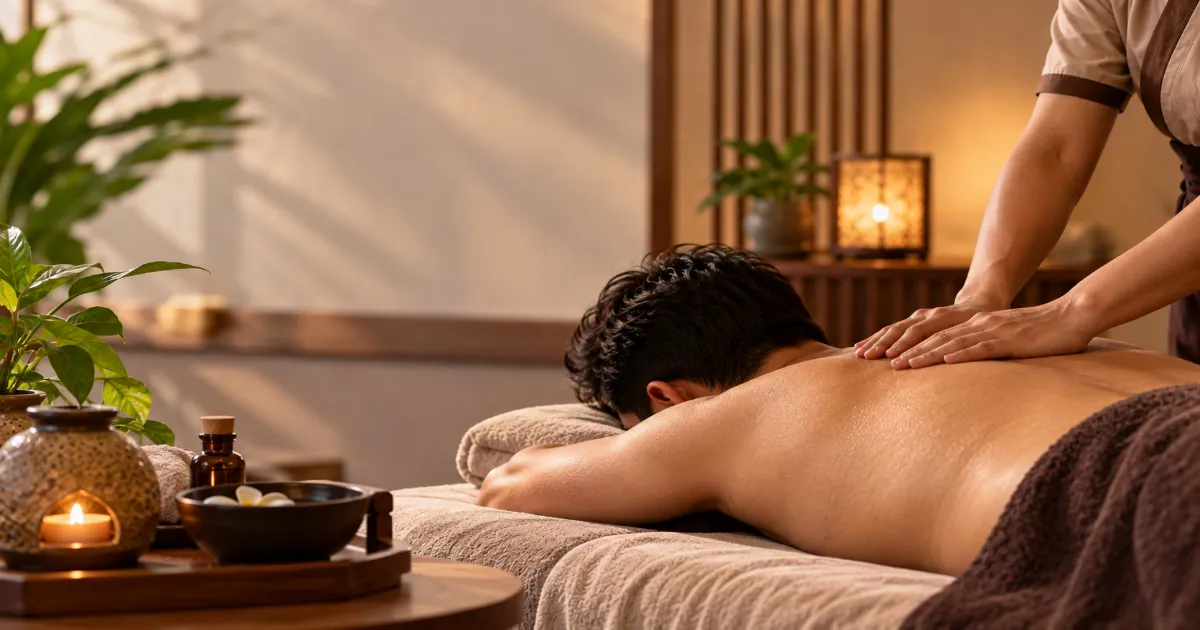

You have finished a long trek, booked a spa session, and now you are standing at the door of a hot room with one practical question: how long should you stay in a sauna before the heat stops doing you good and starts wearing you down? Most guides answer for the sauna or the steam room, rarely both, and almost never by how much experience you actually have. This guide covers both, side by side, and tells you when to walk out early.
The short version: if it is your first time, five to ten minutes is plenty. The rest explains why that number moves with the room, your goal, and your body.
Why the clock matters as much as the heat
Heat therapy is a dose. A short, well-timed session may leave you feeling loose and relaxed and can fit well into an evening wind-down routine. Push past your limit and you can get the opposite: lightheaded, drained, and dehydrated. The benefit and the harm come from the same source, and time is the dial that decides which one you get.
First-timers make a predictable mistake: treating the posted maximum as a target. A sign that says twenty minutes marks an outer boundary, not a goal for your first visit. Your body has no reference point for this kind of heat load yet, so understaying, cooling off, and coming back another day is the smarter play.
Drink water before you go in. You lose fluid through sweating, and starting already dehydrated makes dizziness, fatigue, and headache more likely.
How a sauna and a steam room handle heat differently
A traditional sauna runs hot and dry, usually 70 to 100°C, at roughly 10 to 20 percent humidity. A steam room runs far cooler on the thermostat, roughly 40 to 50°C, but at close to 100 percent humidity. Those two numbers set a trap: the steam room looks gentler, so surely you can linger.
You cannot assume that. Your body cools itself partly by sweating and allowing that sweat to evaporate from your skin. In a dry sauna, evaporation works more effectively. In a steam room saturated with moisture, evaporation is limited, so the lower air temperature can still feel intensely hot and place a meaningful heat load on the body. That is why steam-room sessions should not automatically be longer than sauna sessions. Different facilities set their thermostats differently, so treat every figure here as a range, not a fixed point.
How long you should stay in a sauna, from first visit to regular use
The honest answer to how long you should stay in a sauna: less than you think, at first. Cap your first session at 5 to 10 minutes. Sit on a lower bench where the air is cooler, breathe normally, and leave on the earlier side of that window. The goal is to find your personal tolerance without overshooting it. Cleveland Clinic likewise advises newcomers to start around five minutes and work up gradually.
Over repeated visits, many people build toward 15 to 20 minutes. Harvard Health and Cleveland Clinic both recommend keeping typical sauna sessions in roughly that range. Treat 20 minutes as a ceiling rather than an achievement. If you prefer multiple rounds, shorter periods with a full cool-down between them may feel more comfortable than trying to stay in continuously.
How long to stay in a steam room
For a steam room, first-timers should also start at 5 to 10 minutes, and most regular users should keep the session around 10 to 15 minutes. Healthline’s steam-room guidance recommends limiting steam-room time to about 10 to 15 minutes. Because high humidity limits evaporative cooling, use the clock as a guardrail and leave sooner if you feel uncomfortable.
The Anura Spa session-length matrix
Here is a practical side-by-side guide to sauna and steam-room timing by experience level. The combined-use figures are conservative practical guidance rather than medically established limits; temperature, hydration, health status, and individual tolerance matter more than reaching a particular number.
Experience level | Sauna | Steam room | If using both |
|---|---|---|---|
First-timer | 5–10 min | 5–10 min | Choose one environment only |
Occasional visitor | 10–15 min | 8–12 min | Around 20 min total heat, with a full cool-down |
Regular user | 15–20 min | 10–15 min | Around 25–30 min total, with a full cool-down |
Adjusting session length by wellness goal
After a hard trek or a heavy workout, cool down and replace fluids before adding another heat load. If you are still overheated, dizzy, unusually fatigued, or dehydrated, skip the sauna or steam room until you have recovered. When you do use heat, keep the round shorter, closer to 8 to 12 minutes, and prioritize the cool-down.
For relaxation and an evening wind-down, a single moderate session is usually more sensible than a marathon one. Ten to fifteen unhurried minutes followed by a gradual cool-down may help you feel relaxed without leaving you depleted.
If you prefer humid air, a steam room may feel soothing to the nose, throat, and skin. Even so, stay within the 10 to 15 minute window. Steam should not be treated as a therapy for respiratory infections or breathing disorders, and evidence has not shown consistent benefit from heated humidified air for treating the common cold.
Five signs your body is telling you to leave now
Leave immediately, no matter how few minutes have passed, if you notice dizziness, nausea, a racing or pounding heart, confusion, or feeling faint or weak. These override every number in this article. Cleveland Clinic specifically advises leaving if you feel unwell, dizzy, weak, short of breath, or uncomfortable.
Some people should shorten sessions, seek medical advice first, or avoid heat exposure altogether. ACOG advises against sauna and hot-tub use early in pregnancy. People with cardiovascular conditions or blood-pressure problems should ask their clinician whether sauna or steam use is appropriate for them. Avoid alcohol around heat sessions because it can worsen dehydration and blood-pressure changes. Rehydrate with water afterward.
Using sauna and steam in one visit without overdoing it
If you are a first-timer, pick one environment this visit. Combining both adds more heat exposure while you are still learning how your body responds.
If you already tolerate both environments and want to use them in one visit, there is no medically established rule that the sauna must come before the steam room. Some people prefer sauna first and steam second, but either way, take a proper cool-down between sessions: step out, let your breathing and heart rate settle, and drink water. Healthline’s general sauna guidance likewise notes that there is no hard-and-fast rule for which should come first and recommends water between sessions.
A conservative approach is to keep total heat exposure across both rounds around 25 to 30 minutes rather than taking a full-length solo session in each. The cool-down is not wasted time; it is part of managing the total heat load.
Sauna and steam room timing: questions first-timers ask
Can you stay in a steam room longer than a sauna because the temperature is lower?
Not necessarily. Despite the lower air temperature, very high humidity limits sweat evaporation, so your body cannot cool itself as efficiently. Steam-room limits are therefore not automatically longer than sauna limits: 5 to 10 minutes is a sensible starting point for beginners, and around 10 to 15 minutes is a practical range for regular users.
Is it safe to use the sauna every day if sessions stay under 15 minutes?
Some healthy adults tolerate frequent or even daily sauna use, but there is no universal frequency that is right for everyone. Keep sessions moderate, stay hydrated, and reduce frequency or duration if you are not recovering comfortably. People with cardiovascular or blood-pressure conditions should ask their clinician before establishing a frequent routine.
How long should you wait after eating before going into a sauna or steam room?
There is no universally established waiting time. Avoid entering immediately after a very heavy meal if the heat makes you feel uncomfortable or lightheaded, and let comfort guide you rather than treating a specific number of minutes as a medical rule.
What should you do between a sauna session and a steam room session in the same visit?
Step out, cool down until your breathing and heart rate feel settled, and drink water before the second round. First-timers are better off skipping the second environment entirely.
Do you get the same health benefits from a shorter, hotter sauna as a longer, cooler one?
There is no simple one-to-one formula that makes a hotter, shorter session equivalent to a cooler, longer one. The practical priority is safe, tolerable heat exposure rather than chasing a particular temperature-time combination. Stay within sensible limits and leave early if your body tells you to.
If you would like to try either environment with the timing worked out for you, explore Anura Spa's sauna therapy and steam bath sessions; details and booking are on the sauna and steam page. You can also map out a full visit with the spa day calculator.